

About a year ago I finally threw out the wire brush I had used on my Weber kettle for years. I did not do it because the brush wore out. I did it because I read one too many stories about a stray metal bristle ending up in somebody's steak, and I have grandkids who eat off those grates. I picked up a GRILLART bristle-free grill brush instead, and after a full season of Sunday cooks, I have some thoughts on how it stacks up against the wire brushes most of us grew up using.
Here is the short answer before I get into the details. If you cook for other people, even just your own family on a Sunday afternoon, a bristle-free brush is the safer tool and the better value over a year. A wire brush will still out-scrub it on really baked-on crud, and I am not going to pretend otherwise. But that one advantage comes with a risk I am no longer willing to take, and once you see how the two tools clean up, the choice gets a lot easier.
How I Compared Them
I used the GRILLART for a full season on three different cookers: my Weber kettle, my Z Grills pellet grill, and the Blackstone griddle that sits on the patio prep table. The wire brush I compared it against was the standard kind with metal bristles and a wooden handle, the sort you can grab at any hardware store. I cleaned grates hot, I cleaned them cold, and I cleaned them after everything from burgers to a full packer brisket.
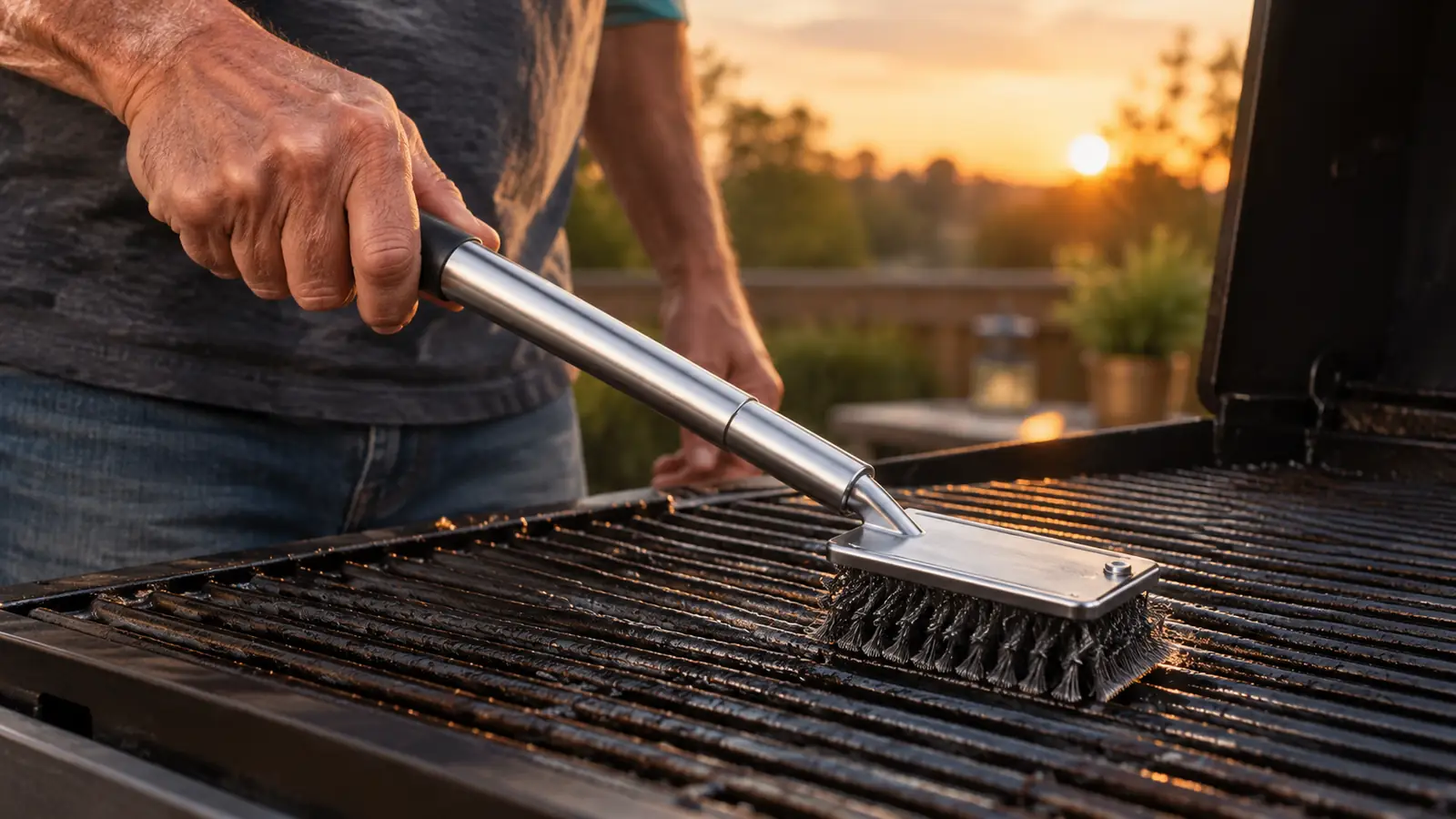
The GRILLART has an 18-inch stainless steel handle, a two-layer double helix head, and a scraper built into the tool. The listing calls the head medium firmness, which is about right. It is stiff enough to move grease and char, soft enough that it does not gouge the seasoning off cast iron. The wire brush, by comparison, is all bristle and no scraper. You scrub with it, and you still need a separate scraper or a wad of paper towel for the worst of it.
| GRILLART Bristle-Free | Standard Wire Brush | |
|---|---|---|
| Bristle safety | No bristles to shed into the food you serve | Metal bristles can break off and end up on the grate or in a bite |
| Heavy buildup | Scraper plus medium-firmness head handles normal cooked-on grease | Stiff metal bristles tear through baked-on carbon faster |
| Handle | 18-inch stainless steel keeps hands clear of the heat | Usually shorter wood or plastic that can get warm |
| Built-in scraper | Scraper included on the same tool | No scraper, need a separate tool or towel |
| Upfront cost | Costs more once, holds up for a season or longer | Inexpensive to replace whenever it wears out |
| Best for | Everyday cleaning before and after each cook | Neglected grates that need aggressive scrubbing |
Where GRILLART Wins
The biggest win is the one you cannot see, which is the whole point. There are no bristles to lose. With a wire brush, every time you scrub, a bristle or two can bend, break, and stay behind on the grate. You cannot always see them. They are thin, they are shiny, and they blend right in with the metal. Then they end up in the food, and in a throat. I know the odds are low on any single cook. I also know I have grandkids who bite first and ask questions later. That trade stopped being worth it to me.
The GRILLART also wins on reach and comfort. The 18-inch stainless handle keeps your hand a good distance from the heat, which matters when you are scrubbing a hot grate between batches of wings. The two-layer double helix head does a solid job of working into the gaps between the bars, and the scraper on the tool handles the stuck-on bits without me having to go back inside for a second tool. After a cook, I scrape, I scrub, I wipe the head clean with a paper towel, and I hang it on the hook by the patio door. One tool, one step.
Where the Wire Brush Wins
I will give the wire brush this: it is the faster tool on the worst buildup. When you let a grate go for a week, or you burn sugar-heavy sauce onto the bars, stiff metal bristles dig in and tear it off in a way nothing soft can match. The GRILLART head is medium firmness, and on really baked-on carbon I have to lean into it and let the scraper do more of the work. I have had cooks where the wire brush was the only thing that would cut through, and I am not too proud to admit it. If you are the kind of cook who cleans the grate once a month whether it needs it or not, a wire brush will feel like the better tool, because for that specific job, it is.
The wire brush also wins on cost and on replaceability. They are inexpensive, they are everywhere, and when one rusts or sheds, you toss it and grab another without thinking. The GRILLART costs more up front. I have had mine about a year and it is still going strong, so that cost spreads out fine, but I understand why a lot of folks keep a wire brush in the drawer as the default. It is what their dad used, and it never let them down. That is a real thing, and I am not going to tell you the wire brush is useless, because it is not.
No Bristles in the Brisket. Ever.
If you cook for family, the GRILLART bristle-free brush takes the loose-bristle worry off the table and still cleans up after a full cook. I have used mine for a year on the kettle, the pellet grill, and the griddle.
Amazon Check Today's Price on Amazon →What the Specs Actually Tell You
The GRILLART listing is refreshingly short on nonsense. It is an 18-inch brush with a stainless steel handle, a bristle-free two-layer double helix head, and a scraper included. The dimensions are 18 inches long, 7 inches wide, and 3.5 inches tall, which is a bigger footprint than a typical wire brush. That head width is exactly what you want when you are dragging it across a 22-inch kettle grate, because it covers more ground per pass and cuts the cleaning time down.
The handle material matters more than people think. Stainless steel does not warp, crack, or get sticky the way wood and plastic handles do after a summer of heat and grease. The listing also calls the head medium firmness. That is not a marketing word. It means the head is stiff enough to move cooked-on grease but not so aggressive that it scratches the seasoning off cast iron. My Blackstone griddle still has its seasoning after a year of cleaning with it, and the kettle grates look better than they did when I was scrubbing them with wire. That matters more than most people realize, because a brush that scratches your seasoning forces you to reseason, and that is a whole afternoon you did not plan for.
How They Clean Up After a Cook
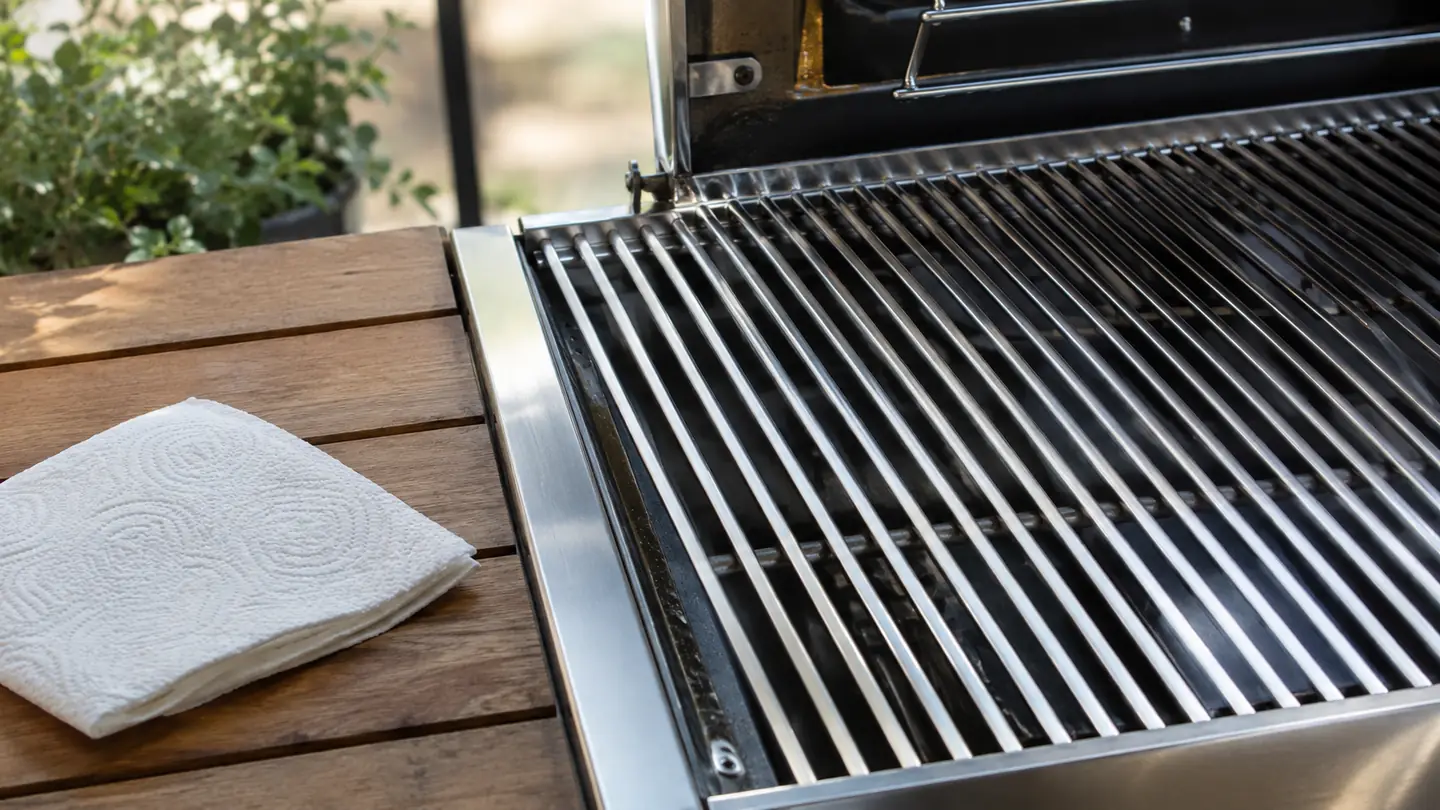
Here is where the GRILLART quietly wins the week. After a cook, I scrape the big stuff with the built-in scraper, run the head across the grate a few times, and then rinse the brush under the hose. The double helix pattern does not trap food the way a dense pad of wire bristles does. A wire brush, by the end of a season, is a matted mess of grease and charred bits that you cannot really get clean. You just use it until it is too far gone, then you buy another one.
The stainless handle rinses off in one pass and dries fast. It does not hold smells. I hang mine on the hook on the patio wall, and it is ready for the next cook with zero fuss. That is the kind of thing that does not show up in a spec sheet, but it is the reason this brush still looks almost new after a year while every wire brush I ever owned looked rough by July.
How I Clean a Grate in Under Two Minutes
For anyone switching from a wire brush, here is the routine that works for me. Right after I pull the food off, while the grate is still hot, I give it one pass with the scraper end of the GRILLART to knock off the big chunks. Then I run the head back and forth across the bars a few times, let it sit for a minute, and do one more pass. The whole thing takes less time than it takes to pour a drink, and the grate is ready for the next batch.
When I am done, I hold the brush under the hose spray for a few seconds and set it on the prep table to dry. That is the entire maintenance routine. With a wire brush, I always had to pick bristles out of the head, knock it against the patio wall to dislodge char, and replace it by mid-summer. I do not miss any of that. The bristle-free design and the stainless handle mean the brush itself stays cleaner than the thing it cleans.
Who Should Buy Which
Buy the GRILLART if you cook for other people on a regular basis, if you clean your grates before and after most cooks, and if the thought of a wire bristle in a child's dinner keeps you up at night. That is most of us, honestly. It is also the right pick if you want one tool that scrubs, scrapes, and stores without a second trip inside. The 18-inch handle and the built-in scraper mean everything you need is in one hand. If you only grill a couple of times a month and you are careful with your wire brush, you might not feel the urgency. I get that. But the switch is cheap insurance, and it is the kind of thing you will never regret doing.
Keep a wire brush around if you are the designated cleaner for a community grill that gets abused all summer, or if you routinely deal with grates so far gone that nothing but metal bristles will touch them. I would not tell you to throw yours away today. I would tell you to stop using it on grates you are about to serve food from, and to check it for loose bristles before every cook. But for the family grill on the patio, the bristle-free brush is the one I reach for now.
What I'd Tell a Neighbor
If we were standing on my patio and you asked whether to switch, here is what I would say. The wire brush cleans faster on the worst days, and it costs less to replace. I am not going to argue with either of those facts. But the GRILLART cleans well enough on every normal cook, keeps your hands further from the heat with that 18-inch handle, and takes the bristle question off the table completely. For the way most of us actually grill, which is a few times a week for people we love, I would make the switch and not look back.
One more thing, and I mean this as a neighbor, not as a salesman. Whatever brush you land on, clean the grate when it is hot and oil it after you clean it. A good brush only does its job if you use it at the right time. The GRILLART makes that easy because it is always hanging right there on the patio wall, ready to go. That convenience is half the reason it actually gets used.
One Tool, No Bristles, a Year of Clean Grates
The GRILLART bristle-free brush has earned its spot on my patio hook. If you are still scrubbing with a wire brush, this is the swap that makes the most sense for a backyard cook.
Amazon Check Today's Price on Amazon →