
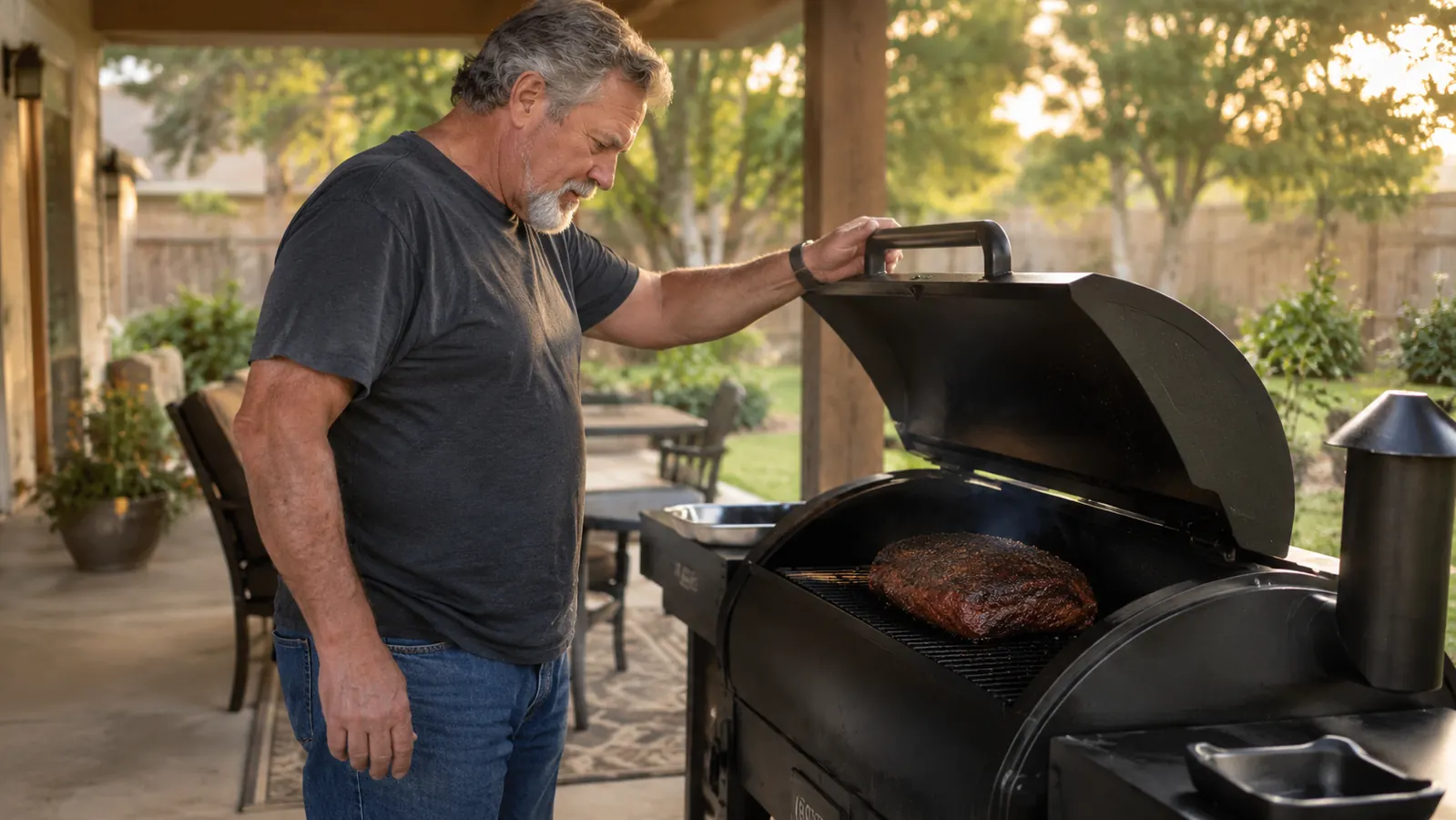
People make pulled pork sound harder than it is. You read about twelve-hour cooks, wrapping at the stall, spritzing every hour, and you figure it's a project for somebody with a lot more patience than you. Here is the truth from a guy who has cooked barbecue on a back patio in Lee's Summit, Missouri for the better part of forty years: a pork butt is the most forgiving cut of meat you will ever smoke. It is also the best first low-and-slow cook you can do on a pellet grill, because the grill handles the temperature and you mostly handle the waiting. Get the basics right and you will look like a hero at your next family cookout. Get them wrong and you still end up with edible pork, which tells you how forgiving this cut really is.
I have been running a Z Grills ZPG-450A2 pellet grill for about two years now. It was my first pellet smoker, and it taught me everything I know about this style of cooking. This guide is the one I wish I had on day one. It walks the whole process, from the butcher counter to the pulled pork sandwich, with the exact temperatures I use and the mistakes I made so you do not have to make them. If you already own a pellet grill, most of this still applies. If you are shopping for one, I will tell you what actually matters when the smoke clears.
Start With a Pellet Grill That Holds Its Temperature
A pellet grill with a PID controller does the temperature work for you. The Z Grills ZPG-450A2 has a large LCD screen, a meat probe, and 459 square inches of cook area, which is plenty for a family cookout. Check today's price on Amazon before you start your first cook.
Amazon Check Today's Price on Amazon →Step 1: Pick the Cut and Season It
Start at the meat counter. Pork butt, also called Boston butt, comes from the top of the shoulder. It is well marbled, which is exactly what you want for a long cook, because that fat renders down and keeps the meat moist. For a family cookout with leftovers, an eight to ten pound bone-in butt is the right size. It will feed a crowd and still give you pulled pork for sandwiches the next day. If the store only has boneless, that is fine too, just figure it will cook a little faster since there is no bone to slow things down.
When you get it home, pat it dry with paper towels. If it has a thick fat cap, trim it down to about a quarter inch. You want some fat left, but you do not need a thick slab of it. Then season it. My rub is simple: salt, black pepper, brown sugar, paprika, and garlic powder, roughly equal parts of everything except the salt, which gets a heavier hand. Apply it generously, and do not be shy. A pork butt this size can take a lot of rub, and the bark you build in the first few hours is the best part of the sandwich.
Let the seasoned butt sit on a tray in the fridge for a couple of hours, or overnight if you plan ahead. The rub pulls moisture to the surface, which helps the bark form. Some folks use a thin coat of yellow mustard as a binder to help the rub stick. It does help, and you will not taste it after the cook. I do it when I remember and skip it when I do not, and both ways turn out fine.
Step 2: Get the Z Grills Ready
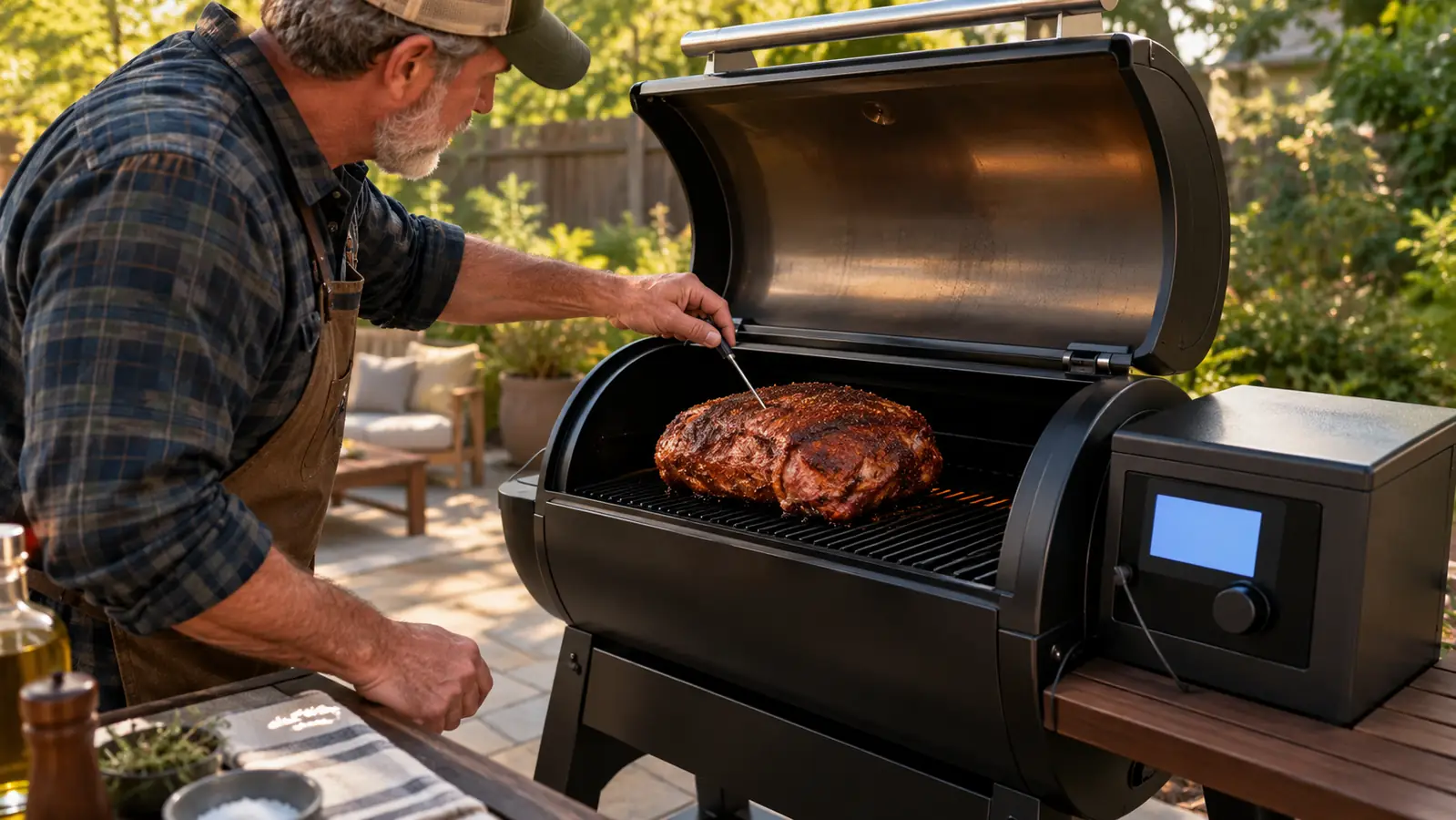
While the rub does its work, get the grill ready. The Z Grills ZPG-450A2 is a freestanding wood pellet grill with an alloy steel body and a PID V3.0 controller. What that controller does matters. It auto-tunes fuel and airflow to hold a set temperature, which is the whole difference between a pellet grill and an old charcoal kettle where you are chasing the needle all day. The 459 square inch cook area gives you room for the pork butt and then some, and the large LCD screen makes it easy to read the temperature from across the patio.
Fill the hopper with pellets, make sure the grease bucket is in place, and set the temperature to 225 degrees Fahrenheit on the large LCD screen. The grill comes with a rain cover, a meat probe, and assembly gloves in the box, so there is nothing else you need to buy just to get started. The foldable shelf and side shelf are handy for holding a cutting board or a platter while you work. I keep my rub tray on the side shelf and the cutting board on the foldable shelf, and it makes the whole cook more comfortable.
Give the grill fifteen to twenty minutes to come up to temperature and settle there. This is the part people skip, and it is the part that causes most of the frustration. A pellet grill that is still climbing when you put the meat on will overshoot, and then you are chasing it all day. Wait until the display reads 225 and stays there for a few minutes. That is your signal that the cook has started.
Step 3: Smoke Low and Slow to the Stall
Put the pork butt on the grates, fat side up. Insert the included meat probe into the thickest part of the meat, making sure the tip is not touching bone. The ZPG-450A2 comes with one meat probe and shows the internal temperature right on the LCD screen, so you can watch the cook without opening the lid. Close the lid and walk away. That is the whole trick. The grill holds the temperature, the probe tracks the meat, and you stay out of the way.
Here is the math I use. At 225 degrees, plan on about an hour and a half per pound. An eight pound butt is a twelve hour cook. That sounds like a lot, and then you realize almost none of it requires you. The internal temperature will climb steadily at first, then it will stall somewhere in the 150s to 160s. The stall is not a problem. It is the collagen and fat breaking down, and it can last two hours or more. The meat is not stuck. It is working. The smoke flavor is building the whole time, and the bark is setting up on the outside.
Leave the lid closed. Every time you open it, you dump heat and add time to the cook. The PID controller is doing its job, feeding pellets and adjusting airflow to hold 225, and the probe is telling you the truth about the meat. You do not need to check on it. You do not need to spritz it every hour. You need to let it be. Go mow the lawn, or sit on the patio and watch the smoke roll.
Step 4: Wrap and Push Through the Finish
When the internal temperature hits about 165 degrees, it is wrap time. Pull the butt off the grill, lay it on a big sheet of heavy duty foil or butcher paper, and wrap it tight. This pushes the cook through the stall faster and keeps the meat from drying out. Put it back on the grates, reinsert the probe if you pulled it, and keep going. The temperature will climb again, and it will climb faster now.
You are looking for an internal temperature between 203 and 205 degrees. But temperature is only half the test. The real test is feel. When the probe slides into the meat like it is going into warm butter, the cook is done. That tenderness usually shows up right in that 203 to 205 range, but every butt is a little different, so trust the feel over the number. If it reads 200 and the probe still meets resistance, give it more time and check again in thirty minutes. Patience here is the difference between pulled pork and pork you have to chew.
If the butt finishes early, do not panic. Hold it in a cooler, wrapped in towels, and it will stay hot for hours. If it finishes late, you can always let the family start on the sides. The worst thing you can do is rush it off the grill at 190 degrees because the clock says dinner time. The meat will be chewy and you will wonder what went wrong. Nothing went wrong. It just was not done.
Step 5: Rest, Pull, and Serve
Do not skip the rest. This is the step that separates good pulled pork from great pulled pork, and it is the one beginners skip because the meat is already cooked and everybody is hungry. Wrap the finished butt in a couple of towels, put it in a dry cooler, and close the lid. Give it at least an hour. Two is better. The rest lets the juices redistribute through the meat, and it makes the pull easier. The internal temperature will stay hot for a long time, which is exactly what you want.
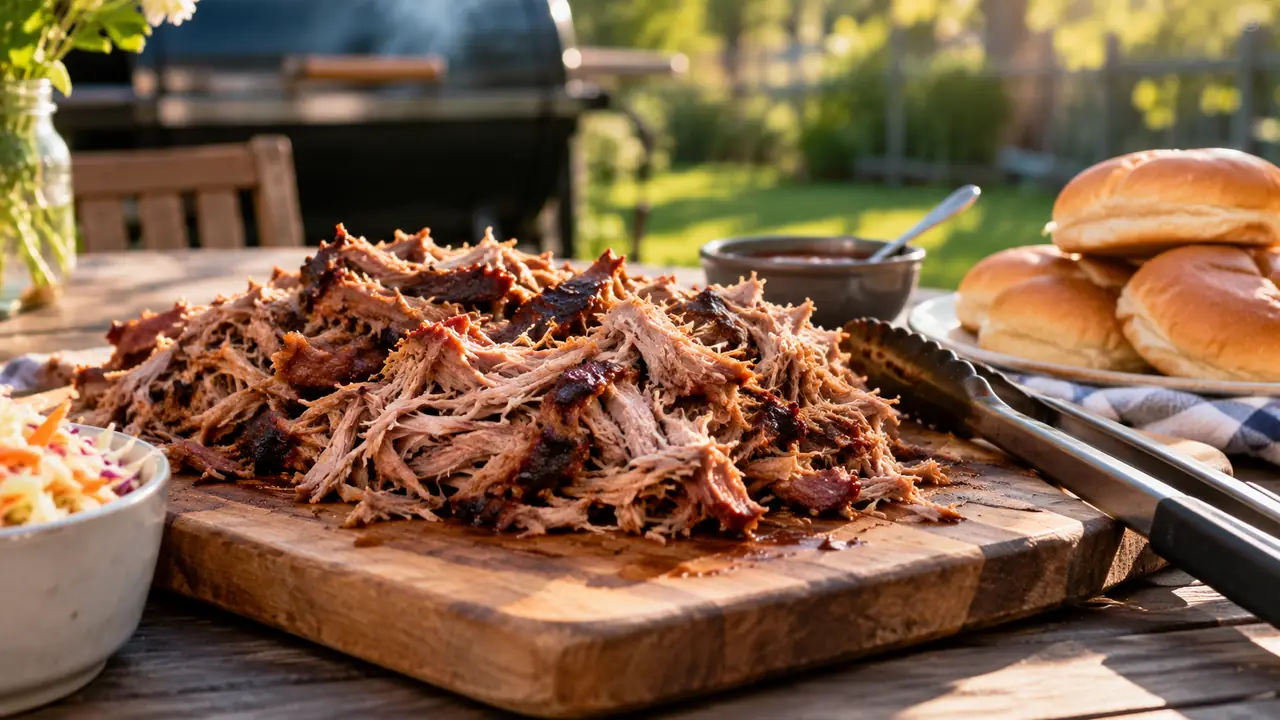
When you are ready to eat, unwrap the butt and pull the bone out. If the cook went right, the bone slides out clean with almost no resistance. Pull the meat apart with your hands or two forks, and discard the big chunks of fat you trimmed past. Serve it on soft buns with sauce on the side, not poured over everything. Let people sauce their own sandwich. That way the pork flavor comes through and nobody argues about how much sauce is too much.
Leftovers are a gift. Pulled pork reheats beautifully, and it makes a fine taco filling, a fine topping for scrambled eggs, and a fine sandwich on its own with nothing but a little extra rub. I have also frozen it in zip bags for a quick dinner later. It thaws and reheats without losing much. Do not be surprised if the family asks when you are smoking another one before the first batch is gone.
What Else Helps
A few tools make the cook easier. I use a MEATER Plus wireless thermometer alongside the grill's meat probe, mostly so I can keep an eye on the temperature from inside the house while the football game is on. The grill's included probe handles the main cook, and the wireless unit is a backup and a double check. A spray bottle with apple juice or apple cider vinegar is nice for spritzing the butt every couple of hours, but it is optional, and I skip it more often than not.
What is not optional is a good cleaning routine. I keep a GRILLART bristle-free brush by the grill and give the grates a scrape after every cook, and I empty the grease bucket before it gets full. A cooler big enough for the wrapped butt is worth having, and so is a roll of heavy duty foil. Pellets matter too. Use a brand you trust and keep the bag dry. That is the whole list. Nothing exotic, nothing expensive, and none of it is a substitute for letting the cook run its course.
One question I get a lot is whether pellets actually add smoke flavor. They do, but it is lighter than what you get from a stick burner, and that is fine for most people. If you want more smoke, you can add a smoke tube or run the first couple of hours at a lower temperature before you bump it up. I do not bother with either. The flavor from the Z Grills on a long cook is plenty for pulled pork, and the meat, the rub, and the smoke all come through balanced.
An 8-pound pork butt is about a 12-hour cook. Maybe 20 minutes of it is actual work. The rest is the pellet grill holding 225 degrees while you do something else.
I have cooked pork butts on a Weber kettle for years, and I still do when I want to tend a fire. But on a weekend when the grandkids are coming over and I want the food to be right without me hovering, the Z Grills is what I reach for. Set the temperature, trust the probe, wait for the pull, and you will have barbecue that tastes like you worked a lot harder than you did. That is the whole point of a pellet grill, and this one does it well.
Ready to Smoke Your First Pork Butt?
You do not need a fancy smoker to make pulled pork your family talks about for a week. The Z Grills ZPG-450A2 gives you a PID controller, a meat probe, and 459 square inches of cook area at a price that makes sense for a backyard cook. Check today's price on Amazon and see if it fits your patio.
Amazon Check Today's Price on Amazon →