
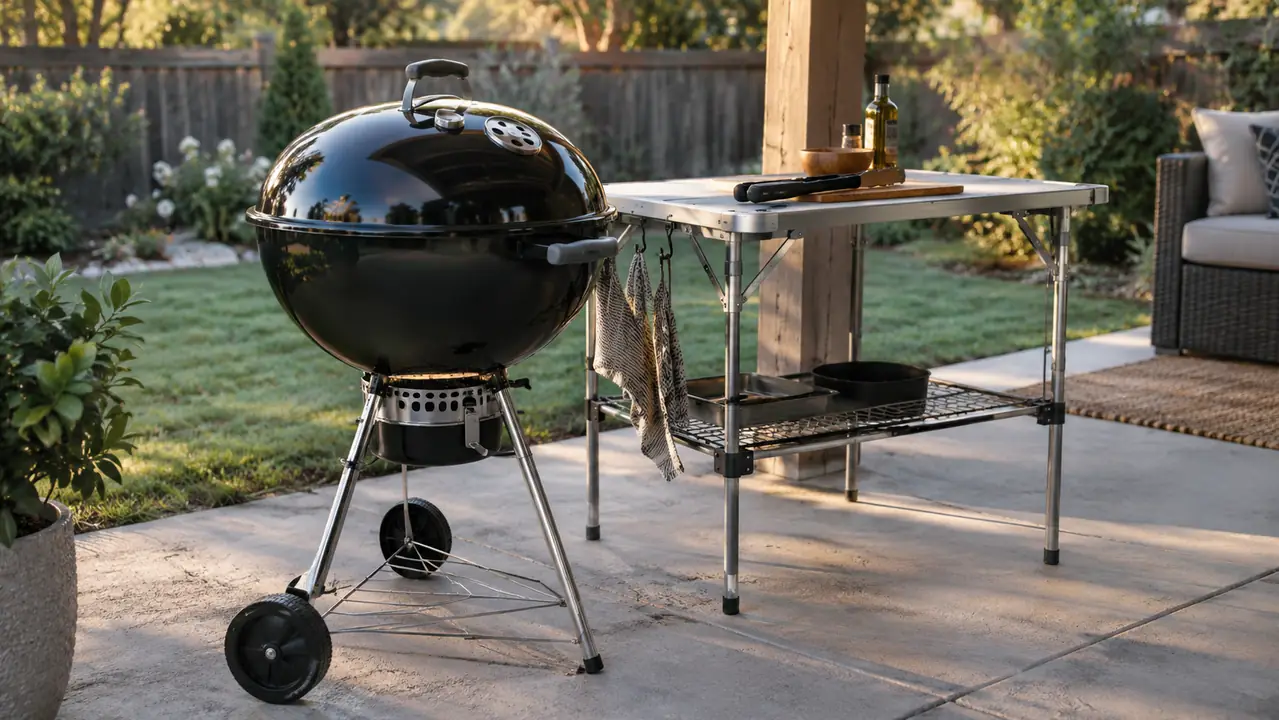
I have owned a Weber kettle for most of my adult life, and the one on my patio right now is about six years old. It has cooked a dozen burgers on a Tuesday, a sixteen-pound brisket that ran overnight while I slept, and more chicken halves than I can count for Sunday cookouts with the kids and grandkids. When a neighbor asks what to buy for their first real grill, this is the one I point to. It is simple, it is cheap to run, and it makes food taste like charcoal fire instead of gas, which is the whole point.
The kettle is not the fanciest grill I own. I have a pellet smoker that holds temperature while I nap, and a griddle that Carol uses for breakfast. But the kettle is the one I reach for when I want to actually cook. It does not have a thermostat or a fan to hold a temperature for you. It has a bowl, a lid, a grate, and dampers. That sounds like a short list, and it is. That is exactly why it has stayed on my patio for six years.
The Quick Verdict
The 22-inch Weber kettle is the best value in backyard grilling if you are willing to tend a fire. Six years in, mine still grills and smokes as well as the day I bought it.
Amazon Check Today's Price →The Grill I Keep Coming Back To
After six years of weekly cooks, the Weber Original Kettle is still the first grill I reach for. See today's price on Amazon and decide for yourself.
Amazon Check Today's Price on Amazon →How I've Used It
My current kettle has been on the patio for about six years. Before that I had another one for close to twenty, and the only reason I replaced it was that the legs finally got wobbly after a move. I use the kettle at least once a week, sometimes twice. In the summer it is the default grill for burgers, brats, chicken, and pork chops. When the kids bring the grandkids over on Sunday, I light a chimney of charcoal and cook enough for eight or nine people on that 363-square-inch grate.
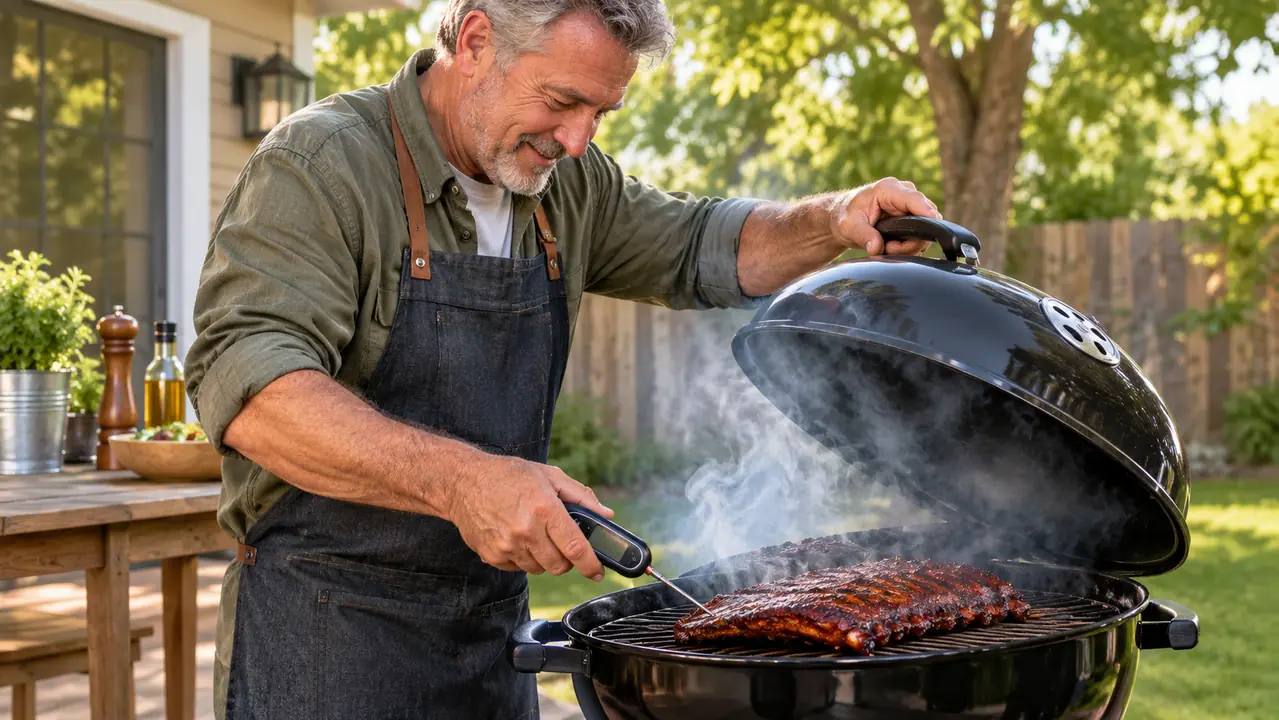
The same grill does low and slow work. I have run pork shoulders and briskets on it for six, eight, even fourteen hours. I set up a two-zone fire, with the coals on one side and the meat on the other, then use the dampers to keep the temperature in the 225 to 250 range. It takes attention. I check it more than I would a pellet grill. But the flavor is worth it, and the MEATER Plus thermometer lets me watch the meat without lifting the lid.
I have also used the kettle for things people do not expect: a whole chicken spatchcocked flat, a pan of mac and cheese under the grate, even a cast-iron skillet of cornbread on the cooler side. It is a grill, a smoker, and an outdoor oven all in one. That range is what makes it hard to beat.
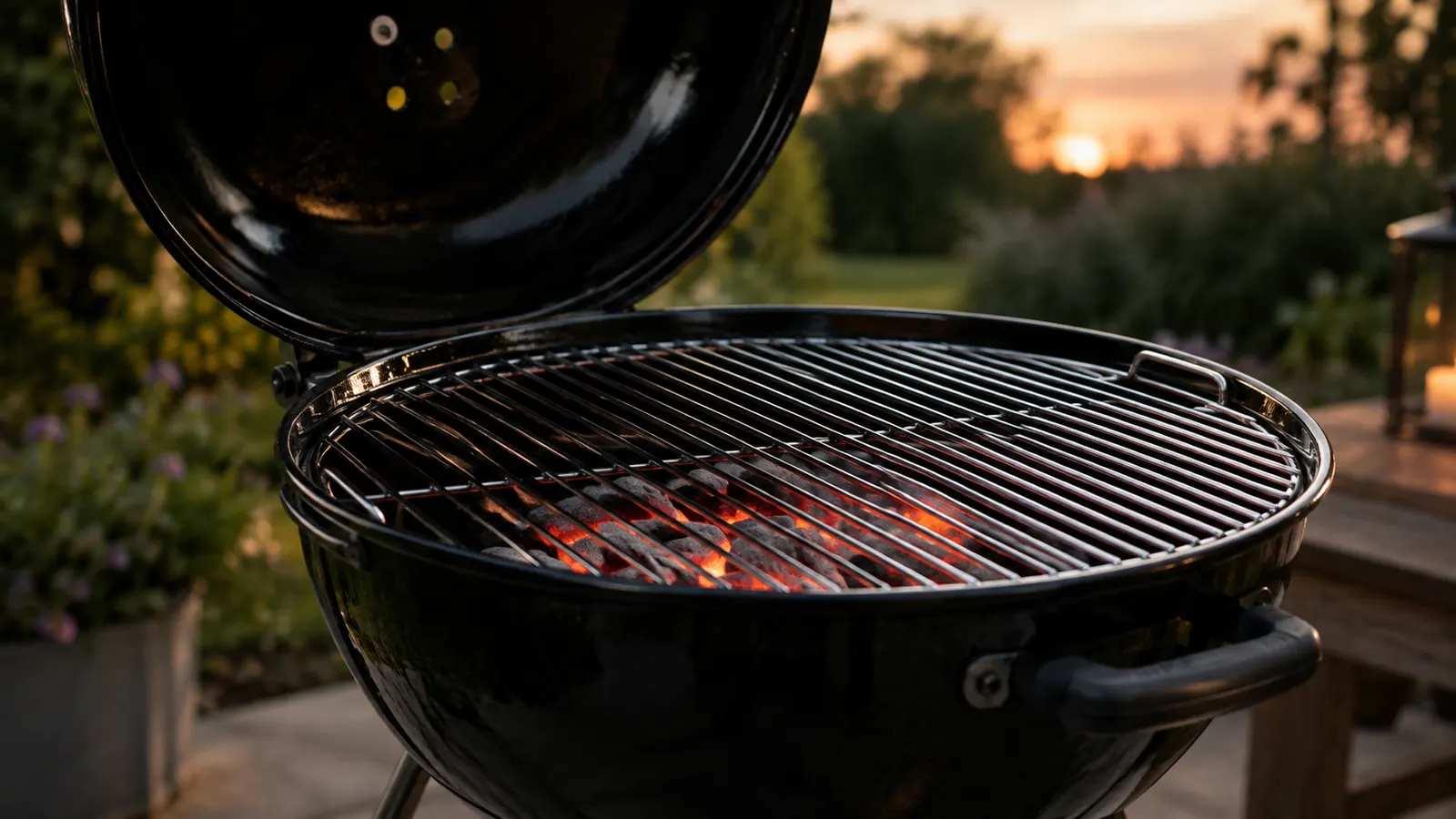
I light the kettle with a chimney starter nearly every time. I fill the chimney with charcoal, set it on the lower grate, and light a few sheets of newspaper underneath. In about twenty minutes the coals are glowing and ready to spread. It is a small ritual, and it is part of why I enjoy cooking outside. The routine is not a burden; it is the point.
What Six Years of Kettle Cooking Taught Me
First lesson: the kettle rewards patience. A charcoal fire needs twenty to thirty minutes to settle into a clean, even burn. If you put food on before the coals are ready, you get bitter smoke and hot spots. If you wait, the same grill holds a steady temperature for hours. That is the biggest difference between people who love their kettle and people who give up on it.
Second lesson: buy a good thermometer. The kettle does not tell you the temperature of the meat. I use the MEATER Plus on every cook, and I have learned to trust it over my own guesses. A brisket is done when it probes like butter, not when the clock says it should be. That advice has saved more cooks than any gadget I own.
Third lesson: the porcelain-enameled bowl and lid are not just for looks. They hold heat, they clean up easily, and they do not rust like the cheap grill I hauled to the curb a few years ago. That old propane grill fell apart in three years. This kettle has outlasted it by double and still looks right.
The listing says the grate holds up to 13 burgers made with a Weber burger press. I have not counted exactly that many, but I have loaded it with a dozen burgers and still had room for a few ears of corn. That is the practical kind of capacity that matters on a Sunday afternoon.
Charcoal quality matters more than the grill. I use lump charcoal for low and slow cooks and briquettes for burgers. The kettle does not care which you use, but the fire behaves differently. Lump burns hotter and cleaner. Briquettes are easier to keep at a steady temperature. Try both and you will learn what your grill likes.
Airflow Is Everything
Here is where my old HVAC training kicks in. A charcoal grill is a heating appliance with no thermostat. You are the thermostat, and your only controls are the dampers. Air in feeds the fire. Air out pulls the smoke. Learn to read those two paths and you can hit any temperature you want.
Start with the dampers wide open to get the coals hot. Once the fire is established, close the bottom damper partway to lower the heat, and use the top damper to fine tune the draw. On my kettle, a small adjustment changes the temperature by twenty or thirty degrees. That is precise heat control, and it is built into a grill that costs a fraction of what a pellet smoker costs.
People overcomplicate this. You do not need a computer to hold 250 degrees. You need a clean fire, a steady hand, and the patience to let the grill settle. The kettle gives you the tools. The rest is practice, and practice is free.
Wind is the one thing that can make a kettle misbehave. A gusty afternoon will push heat across the bowl and make the temperature swing. I keep the kettle on the covered side of the patio, and I use the top damper to block the worst of the breeze. Once you learn to read the fire, you can cook in weather that sends other grillers inside.
Cleanup Is the Real Test
Any grill can cook a steak. The real test is what happens after dinner, when the food is gone and the grate is covered in crusted drippings. This is where the kettle earns its keep. The One-Touch cleaning system gathers the ash and drops it into the ash catcher underneath. One sweep, and the ash is gone. No flipping the grill over, no shop vac, no mess on the patio.
The cooking grate is durable plated steel, and it cleans up with a good brush. I use the GRILLART bristle-free brush because I do not want stray wire bristles anywhere near food. After the grate is clean, I wipe the porcelain-enameled bowl with a damp rag. The finish does not chip or peel, and it does not hold onto grease the way bare steel does.
Cleanup takes me about ten minutes. That is the number that matters. A grill you dread cleaning is a grill that stays under a cover. The kettle is not that grill.
The ash catcher is one of those details you do not appreciate until you have owned a grill without one. My old propane grill had a tray that slid out and dumped ash everywhere. The kettle's catcher is a simple metal bucket that hangs under the bowl. When it is full, I pull it off, dump it in the trash, and put it back. That is the whole job.
What It Does Best and Where It Struggles
What the kettle does best is simple: it makes charcoal food taste like charcoal food. Burgers get a sear and a smoke flavor that gas cannot match. Chicken skin crisps instead of steaming. A pork shoulder comes off with a bark that people ask about. For the money, nothing else in my patio does all of that.
Where it struggles is convenience. There is no push button start and no automatic temperature control. You have to light the charcoal, wait for it to ash over, set the dampers, and check on the fire through a long cook. On a weeknight after work, that is a real cost. I have a pellet grill for the days I want to start a fire from the couch. The kettle is for when I want to cook.
The special features list includes a heat shield, and it does what the name says. It protects the bottom of the grill on long cooks. It is a small part, but it is one of the reasons the kettle holds up year after year.
The 22-Inch Size Is the Sweet Spot
The 22-inch Weber kettle is the size most people should buy. It gives you 363 square inches of cooking surface, which is enough for a couple of chickens or a big batch of burgers, and it fits on a patio without taking over. The smaller kettles are easier to store, but they run out of room fast when company shows up. The bigger ones cook more, but they cost more and they drink charcoal.
The dimensions matter more than you might think. The grill is 25 inches deep, 25 inches wide, and 39.5 inches tall. That height is comfortable for me, and I am not a tall man. It puts the cooking grate right about waist level, so you are not bending over to flip a burger. It also fits under the edge of my covered patio without any trouble.
The 10 year limited warranty is another reason I do not hesitate to recommend it. I have had my current kettle for six years and the other one for close to twenty. I expect this one to outlast me. That is not a claim I can make about the pellet grill or the griddle.
What I Liked
- Porcelain-enameled bowl and lid hold heat and clean up easily
- One-Touch cleaning system drops ash into the catcher in one sweep
- 363 square inches of cooking space handles a family cookout
- Dampers give real temperature control once you learn them
- 10 year limited warranty on a grill that already lasts decades
Where It Falls Short
- Charcoal takes time to light and settle before you cook
- No built-in meat thermometer, so you need your own
- The 22-inch grate gets crowded if you are cooking for a big crowd
- You have to tend the fire on long low and slow cooks
Six years in, the porcelain-enameled bowl still looks like the day I brought it home, and the One-Touch system still drops the ash in one sweep.
Who This Is For
This grill is for the backyard cook who wants one tool that can do it all. If you grill burgers and brats on the weekend, want to try a pork shoulder or a brisket, and do not mind spending twenty minutes with a chimney starter and a bag of charcoal, the 22-inch kettle is the right call. It is also for the person who likes to understand their equipment. There is no black box here. You see the fire, you set the dampers, and you learn exactly what makes food taste good.
If you are new to charcoal, do not buy a bunch of gadgets. Buy the kettle, a chimney starter, a bag of lump charcoal, and a good thermometer. That is the whole kit. Learn to light a fire and hold a temperature before you spend money on anything else. The kettle will teach you more in one summer than any accessory will.
Who Should Skip It
Skip the kettle if you want dinner on the table in twenty minutes with no fuss. A gas grill or a pellet grill will get you there faster, and I own a pellet grill myself, so I am not judging. Skip it if you hate ash, if you have no covered place to store a grill, or if you want to set a temperature and walk away for eight hours. The kettle is not that tool. It is a charcoal grill that asks something from you and gives back flavor in return.
Still the Grill I Recommend First
After a year of writing down every cook, the Weber Original Kettle is still the first grill I point people to. Check today's price on Amazon and see why it has been a backyard staple for generations.
Amazon Check Today's Price on Amazon →