

Back in April, I ruined a five-pound pork shoulder in front of the whole family. The kids and grandkids were coming over for Sunday dinner, and I had bragged all week about the low-and-slow pork I was going to put on the table. I cooked it the way I had cooked everything for decades: I poked it, I squeezed it, I checked the clock, and I pulled it off when it looked done. It looked done at about three in the afternoon. It was not done. We ate at six, and every slice was like chewing a boot.
That was the night I admitted to myself that guessing was the problem. I am an HVAC guy. I spent thirty years reading temperatures for a living, and here I was cooking a piece of meat by feel. It made no sense. I had a thermometer in my toolbox that could read a duct within a degree, but the only thing I had in the kitchen was a cheap instant-read I always forgot to grab until the meat was already off the grill.
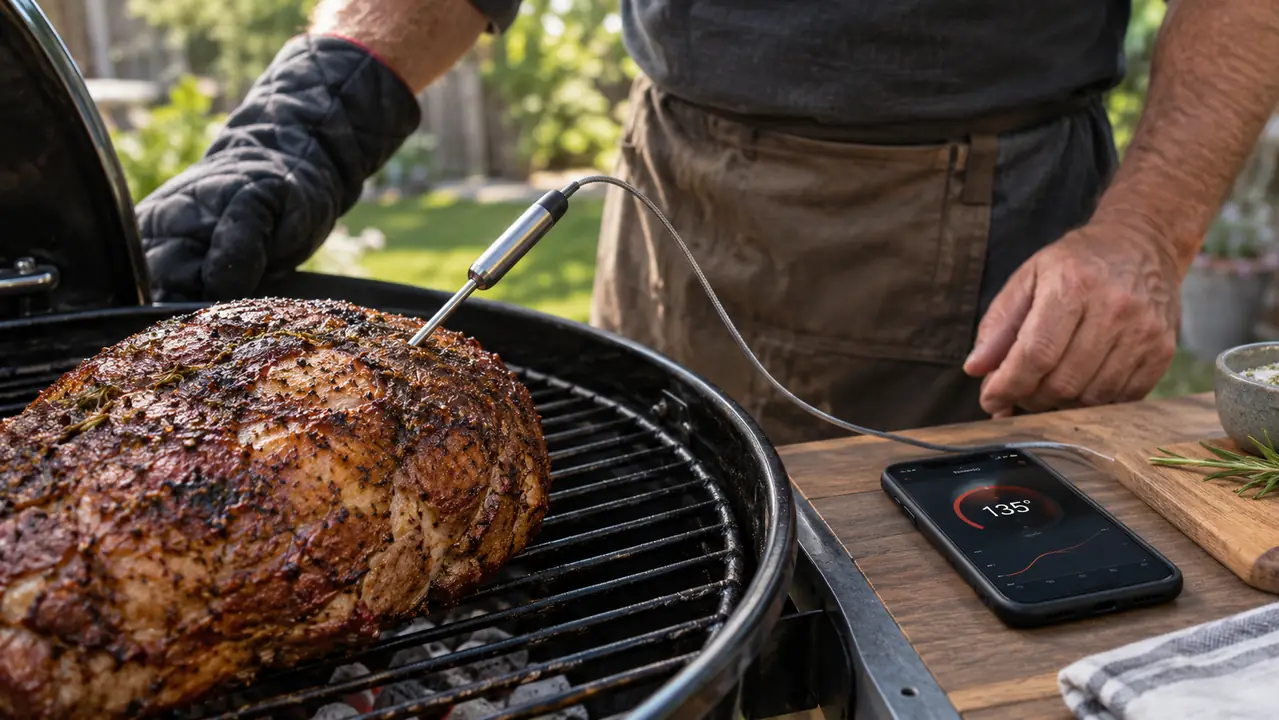
So I started looking at wireless thermometers, and the MEATER Plus kept coming up. I ordered one, and it showed up in about two days. The box had the probe, a bamboo charger, and a AAA battery. That was it. No console, no base station, no wires running out of the grill. The probe is stainless steel, it is waterproof, and it reads the meat at the same time it reads the air around it.
The first thing I noticed was how simple the setup was. You charge the probe for about five minutes, and that gives you around two hours of cook time. You stick it in the roast, close the lid, and walk away. The app on my phone shows the internal temperature and the ambient temperature, and it has a timer. The Bluetooth reaches about 165 feet, so I can sit in the living room with Carol and still see what the grill is doing.
The first Sunday after it arrived, I did another pork shoulder. Same size, same grill, same rub. The only difference was the MEATER Plus. I set the alarm for 203 degrees, which is where that cut finally starts to break down, and I let the probe do the thinking. It took about nine hours. It hit 203 right around when the family was due to arrive. I wrapped it, let it rest, and that was the best pork I have ever cooked in my life. One of the kids asked what I had done different. I told them I finally stopped guessing.
I have used it on every grill I own since then. The Weber kettle, the pellet smoker, even the Blackstone griddle when I do breakfast sausage for the grandkids. It works in the oven too, which is where I do my turkey at Thanksgiving. I have used it on briskets, ribs, chicken thighs, and a prime rib last Christmas that came out medium rare edge to edge. One of the kids asked me to write down what I did so they could copy it. I told them the truth: I set the probe for 130 and let the grill do the rest.
I set the alarm for 203 degrees and let the probe do the thinking. That was the best pork I have ever cooked in my life.
Stop Guessing. Let the Probe Do the Thinking.
The MEATER Plus shows you the internal temperature and the ambient temperature right on your phone, with a 165-foot Bluetooth range and a timer that tells you when dinner is actually ready. If you have ever pulled a roast off too early or too late, this is the fix.
Amazon Check Today's Price on Amazon →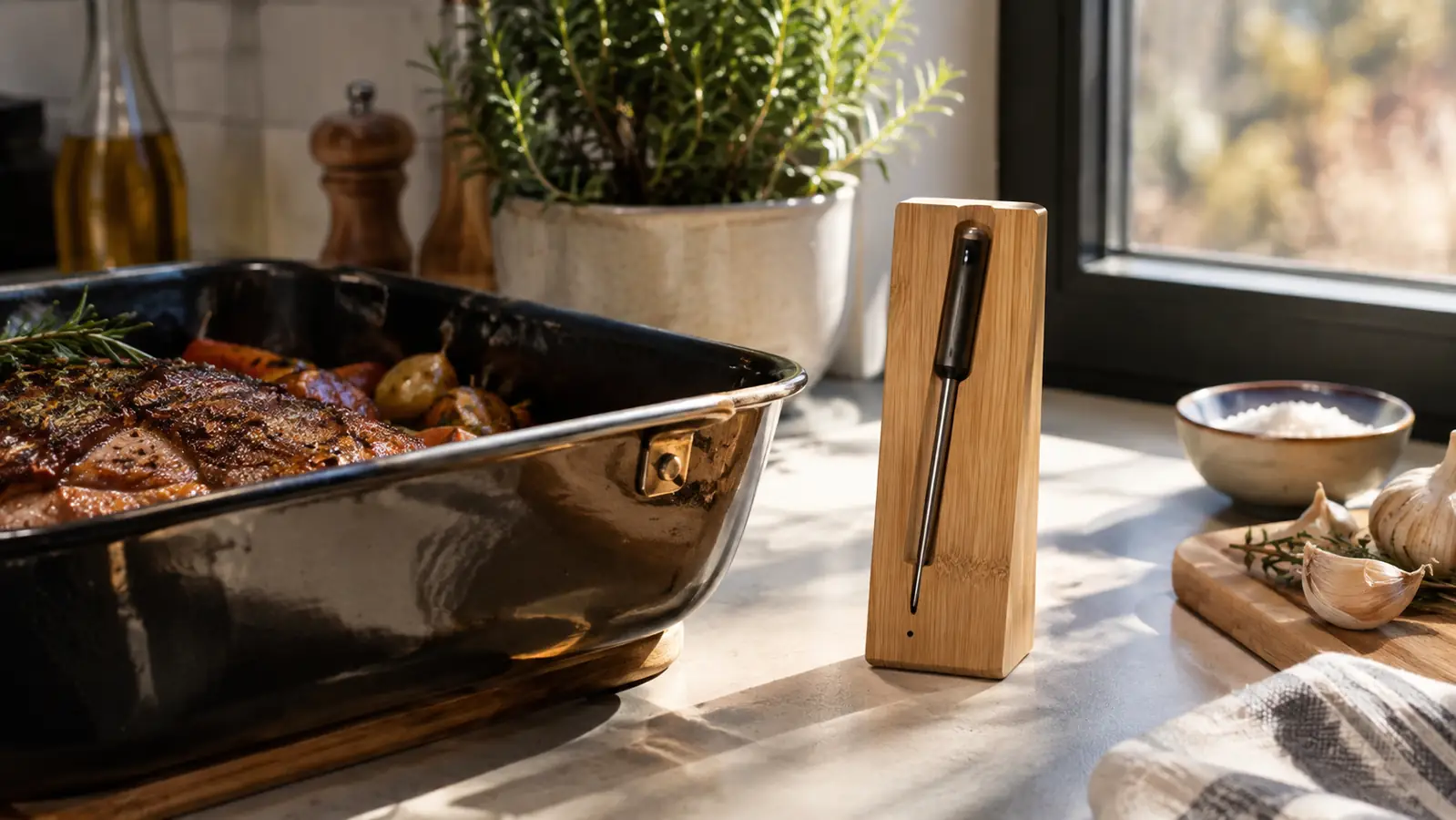
Now, I am not going to tell you the MEATER Plus fixed every problem I have ever had at the grill. It does not. You still have to trim the meat, manage the fire, and know your cooker. What it does is take the guesswork out of the one thing that used to ruin my food: knowing when to pull it off.
There are a couple of things worth knowing before you buy. The probe is the whole system, so you have to keep track of it. I keep mine in the bamboo charger on the counter, which is also how it charges. The app is how you read the temperatures, so if you do not like cooking with a phone, this may not be for you. And the probe reads up to 527 degrees on the ambient side, which is plenty for any grill, but keep it out of a direct flame.
I have owned mine about a year and a half now, and it has been through rain, grease, and a couple of drops onto the patio. It still reads true. The battery is a standard AAA that you replace in the charger, and the probe charges off that. It is the one piece of gear I would replace the same day if it ever died. Carol rolls her eyes when I say that, but she has also stopped asking me if the meat is done. She knows I will tell her when the probe says so.
The honest version is this: I bought it because I was tired of ruining expensive meat in front of people I love. It has paid for itself many times over, not because it is fancy, but because it is simple. You stick it in, you read the numbers, and you cook to temperature instead of to the clock.
What I'd Tell You If We Were Sitting at My Kitchen Table
If you came over to my patio and asked me whether you need a wireless thermometer, here is what I would say. If you only cook burgers and hot dogs, you do not need one. Keep your money. But the day you decide to cook a brisket, a pork shoulder, or a holiday roast, a thermometer like the MEATER Plus is not a gadget. It is the difference between dinner you are proud of and dinner you apologize for. Buy it before you buy the meat, not after. And whatever you do, stop cooking to the clock. The clock has no idea what is happening inside that roast. The probe does.
Cook to Temperature, Not to the Clock
The MEATER Plus has been on my counter for a year and a half, and it is the first thing I reach for on cook day. Dual sensors, a 165-foot Bluetooth range, and a timer mean I can visit with family instead of hovering over the grill.
Amazon Check Today's Price on Amazon →