
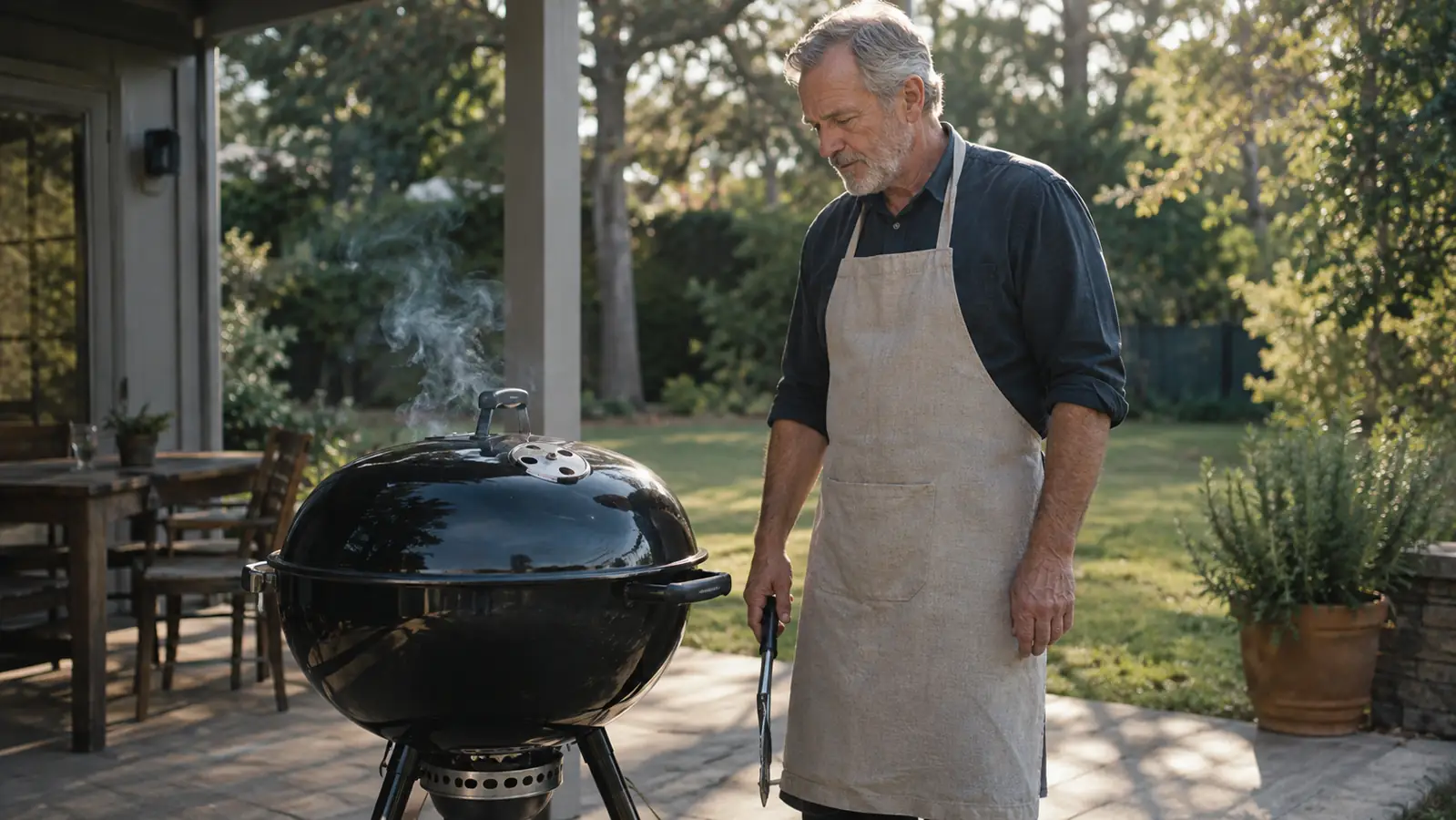
Here's the question I get more than any other when someone sees my patio setup: why are you still cooking on that Weber kettle when those big ceramic kamado grills are sitting right there in the store? It's a fair question, and I get it. A kamado does things a kettle can't, and I'm not going to pretend otherwise. But the answer has nothing to do with which one is 'better.' It's about what you'll actually use, what fits the way you cook, and whether the price gap buys you something you'll feel on a Tuesday night. I've cooked on kettles for most of my adult life, and I've spent enough weekends on kamados to know what each one does well. Let me walk you through what I found.
The short answer is this. If you're a backyard cook who grills for the family on weekends and wants to learn real low-and-slow without spending a fortune, the Weber Original Kettle is the better buy. If you're already hooked on smoking, if you cook long cooks every week, and if you want the most efficient charcoal oven money can buy, the kamado earns its price. I cooked on both side by side over two weekends to figure out where each one honestly wins. Same bag of charcoal, same cuts of meat, same notepad. What follows is the comparison, with the wins and the losses called the way I saw them.
How I Compared Them
I kept it simple, because that's how most of you will use these grills. I ran three cooks on each one. First, a direct-heat cook: burgers and brats, the weeknight standby. Second, a two-zone cook: a whole chicken spatchcocked, cooked indirect with a drip pan under it. Third, a low-and-slow cook: a pork shoulder, held between 225 and 250 degrees until it hit 203 internal. I weighed the charcoal before and after each cook, wrote down how often I had to touch the vents, and timed the cleanup. I also paid attention to the stuff that doesn't show up on a spec sheet, like how easy it is to add charcoal mid-cook and whether the wind messes with the temperature.
One thing up front. I own the Weber kettle, and I've owned one for most of my adult life. You should know that before you read another word. But I didn't buy the kettle for this comparison, and I don't get paid differently whether you pick one or the other. I'm telling you which one I'd buy with my own money, and I'm also telling you where the other grill flat-out wins, because pretending one grill is good at everything is how people waste money.
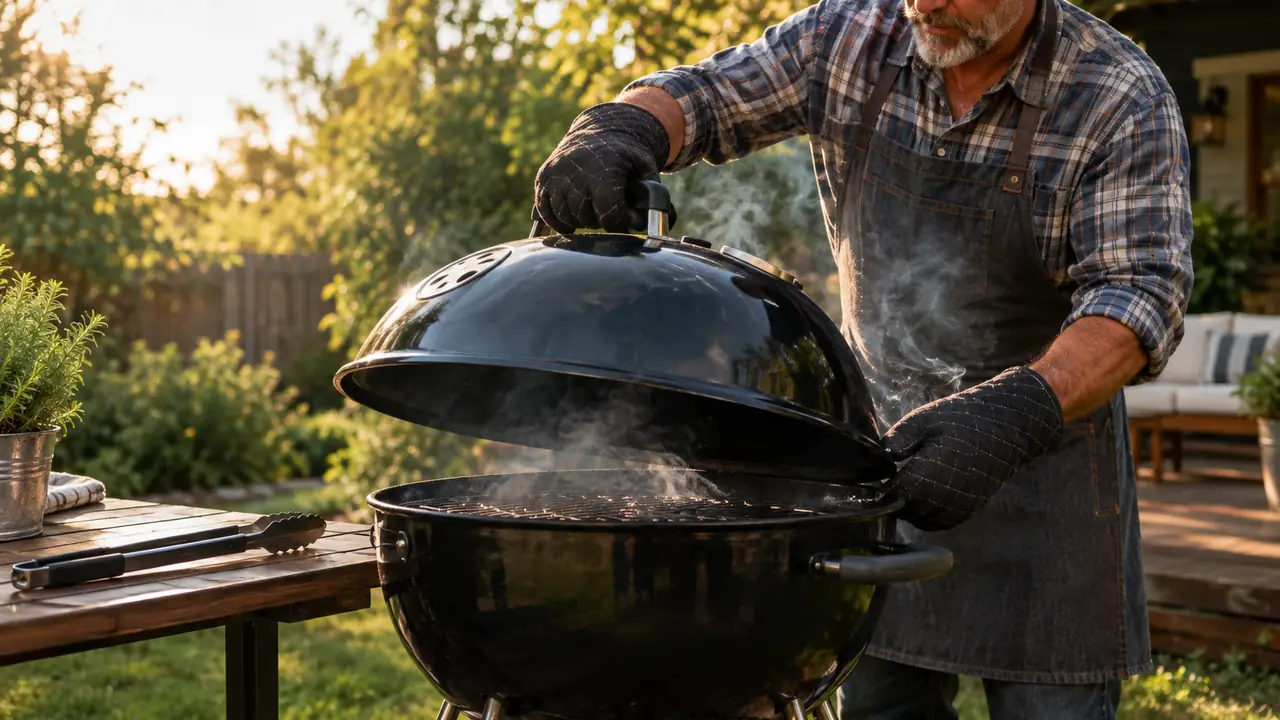
The Comparison at a Glance
| Weber Original Kettle 22-inch | Ceramic Kamado Grill | |
|---|---|---|
| Price | A fraction of the kamado's price, same classic 22-inch size | Several times the price before you add a cart and cover |
| Cooking surface | 363 square inches on the main grate | Roughly 250 to 450 depending on the model |
| Fuel efficiency | Good for charcoal, but it keeps burning to hold heat | Thick ceramic walls stretch one load of charcoal for hours |
| Temperature stability | Holds steady once you learn the dampers, needs watching | Sits at 250 for hours without touching it |
| High-heat searing | Gets hot enough for a good crust, but you'll work for it | Ceramic holds searing heat that blisters a steak |
| Cleanup | One-Touch cleaning system sweeps ash into the catcher | Pull out the firebox and vacuum the ash |
| Warranty | 10 year limited warranty | Varies by brand, ceramic can crack |
| Portability | 25 by 25 inch footprint and 39.5 inches tall, easy to move around the patio | Heavy ceramic body that needs a permanent spot |
Where the Weber Kettle Wins
The kettle wins on price, and that's not a small thing. You get the 363-square-inch cooking surface, the porcelain-enameled lid and bowl, and a 10-year limited warranty for a fraction of what a kamado runs. For a family that grills a few times a week, the price gap buys a lot of charcoal, a lot of meat, and a cover. It also buys you the freedom to make mistakes. You can learn the dampers, overshoot your temperature, and turn a batch of ribs into jerky without feeling like you damaged a piece of fine equipment. That matters more than people admit. A cheap teacher is still a teacher.
Cleanup is where the kettle separates itself, and I say that as the person who scrubs the grates at my house. The One-Touch cleaning system sweeps the ash down into the aluminized steel catcher, and you carry the catcher to the trash. Five minutes, done. A kamado wants you to pull the cooking grate, lift out the ceramic firebox, and vacuum the ash out of the bottom. That's a Saturday chore, not a Tuesday wind-down. When dinner is over, I want the grill to be over too. The kettle is the only charcoal grill I've used where cleanup is genuinely boring, and I mean that as a compliment.
Where the Kamado Wins
I'll give the kamado its due, because it earns it on fuel and temperature. Those thick ceramic walls hold heat like a thermos. Once a kamado is settled at 250 degrees, it sits there for hours on a surprisingly small load of charcoal. In my test, the kamado used noticeably less charcoal over the eight-hour pork shoulder cook, and I touched the vents maybe twice. The kettle held the same cook, but I added charcoal once and adjusted the vents three or four times. If you smoke every weekend, that difference adds up in both fuel and attention.
The kamado also sears like nothing else in the backyard. The ceramic gets hot enough to blister a steak, and it holds that heat even when you drop a cold piece of meat on it. A kettle can get hot, but it loses heat faster, so your first steak sears perfectly and your fourth one cooks a little slower. If you cook a lot of pizza at high heat, or you're chasing a serious crust on a steak, the kamado does it without working up a sweat. That's a real advantage, and I'm not going to wave it away.
Start with the grill that pays you back every week
The Weber Original Kettle gives you real charcoal flavor, a 10-year warranty, and cleanup that takes five minutes. It's the honest first grill for anyone learning low-and-slow, and it's been the backyard standard for decades.
Amazon Check Today's Price on Amazon →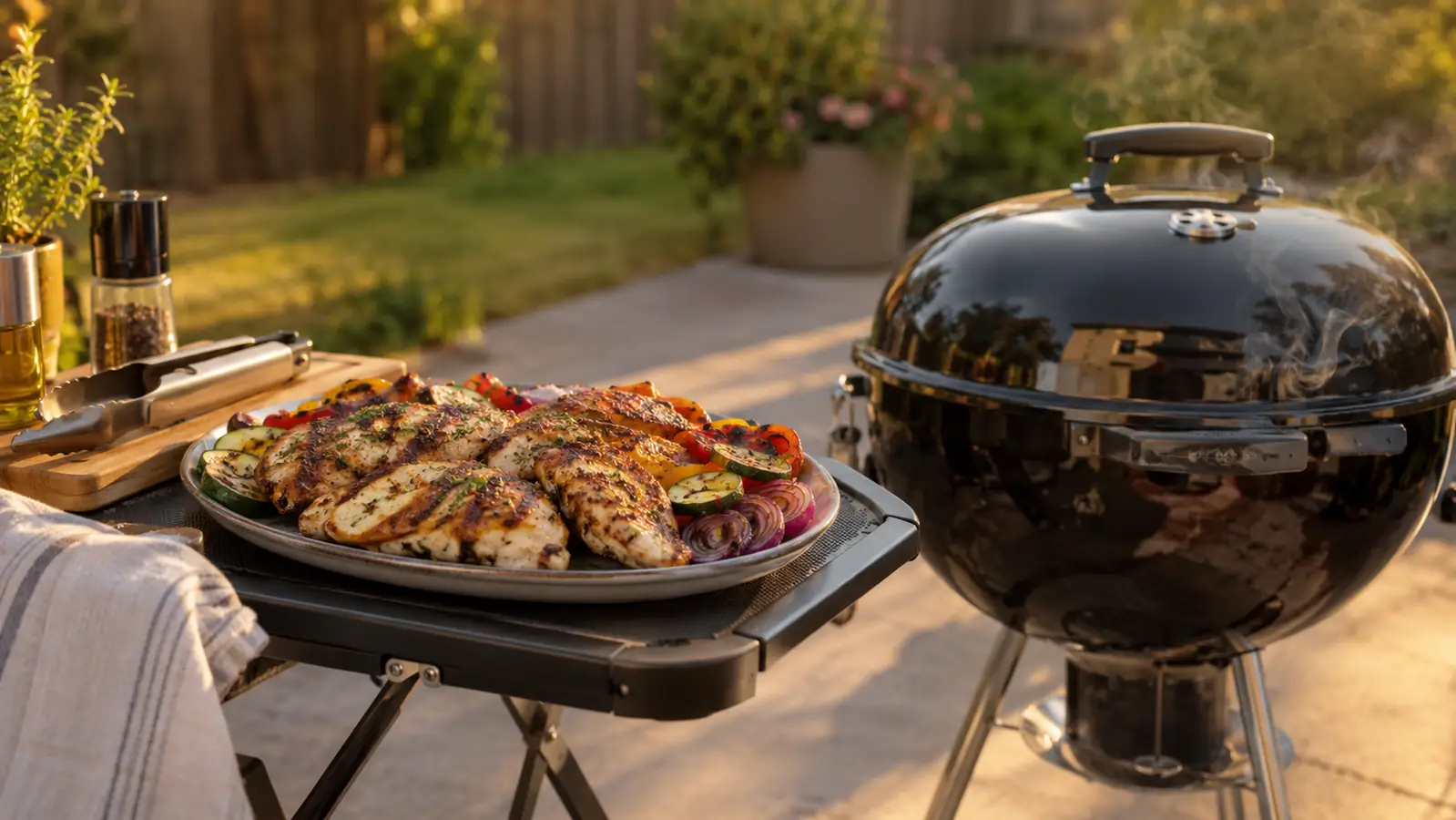
What the Price Gap Actually Buys You
Let's talk about the price gap honestly, because it's the whole reason this comparison exists. The kamado costs several times what the kettle costs, and the difference doesn't stop at the grill itself. Kamado accessories are made to fit that specific cooker, so you pay for the name on the box. Kettle accessories are made by a dozen companies and they all fit the same 22-inch bowl, so the prices stay honest. Over ten years, which is the kettle's warranty period, that difference compounds. You can own the kettle, a cover, a charcoal chimney starter, and a slow-and-sear insert, and still have money left over.
Now here's what the price gap buys you on the kamado side. You get a cooker that holds temperature like a bank vault, uses less fuel on long cooks, and sears harder than anything else I've used. You also get a piece of gear that's genuinely a pleasure to own if you're into it. There's a reason people keep kamados for decades and pass them down. But you also get weight, a learning curve, and a repair bill if you drop the lid or a hailstorm finds it. I'm not saying the kamado doesn't earn its price. I'm saying the kettle earns yours.
The Learning Curve Nobody Mentions
Both of these grills will teach you charcoal cooking, but they teach different lessons. The kettle is an open book. You can see the fire, feel the heat, and watch the smoke. When you mess up, you can see exactly what you did wrong. That's why I tell people to learn on a kettle. It's a transparent teacher. The kamado is a closed box. The ceramic hides the fire, and you're working blind, trusting the vents and your own patience. It's more forgiving once you know it, but it's harder to learn on, because you can't see what's happening inside.
The other part of the learning curve is the wind. I cook on a covered concrete patio in Lee's Summit, Missouri, and the wind here does what it wants. The kettle feels the wind more, because it's a thin metal bowl with the fire right under the grate. A gust can push your temperature around. The kamado shrugs it off, because the ceramic holds so much heat that a gust barely registers. If you cook in a windy spot, that's a point for the kamado. If you cook on a sheltered patio like mine, it barely matters.
Who Should Buy Which
Buy the Weber kettle if you're new to charcoal, if you grill for the family on weekends, or if you want to learn low-and-slow without spending a month of grocery money on a cooker. The kettle is forgiving, it's cheap to feed, and parts are everywhere. You can start with the basic grill and add a slow-and-sear insert or a charcoal basket later, and the 22-inch bowl gives you 363 square inches to work with. It grows with you, which is more than you can say for most gear.
Buy the kamado if you already know you love smoking, if you cook long cooks every week, and if you want set-and-forget temperature control. The people I know who own kamados use them constantly, and they're not shy about what they paid. They made peace with the price because the cooker does exactly what they need. But they also have a permanent spot for it, a cart, and a cover, and they don't move it around. That's a commitment, not a purchase. If you're not ready for that commitment, the kamado will sit there looking impressive while you fire up the kettle anyway.
And here's the part that doesn't fit on a spec sheet. The best grill is the one you actually use on a Tuesday night. I've seen kamados that look like museum pieces because the owner was afraid to burn a cook. I've never met someone who regretted buying a Weber kettle. That's the difference that matters more than any comparison table, and it's the reason my answer to the price gap question is usually shorter than this article.
One-Touch cleaning and a 10-year warranty beat ceramic walls if you're the one scrubbing the grates.
The Bottom Line
Here's how I'd settle it if you're standing in the aisle trying to decide. If the price gap makes you hesitate even a little, buy the kettle and don't look back. It will teach you charcoal cooking, feed your family well, and still be going strong in ten years. If the price doesn't bother you at all, and you know you'll use the kamado's heat retention every week, then buy the kamado and enjoy it. Both are good grills. They're just good for different people, and there's no shame in knowing which one you are.
For my money, and I mean that literally, the Weber Original Kettle is the answer for most backyard cooks. It's the grill I've owned for most of my adult life, the one I reach for on a Tuesday, and the one I'd buy again tomorrow. The kamado is a fine cooker. It's just not the right first cooker for most people. Start with the kettle, learn the fire, and if you outgrow it, the kamado will still be there waiting. You'll know by then whether it's worth the price gap to you.
Make the call that fits your patio
If you're weighing your first charcoal grill, or you want to learn low-and-slow without emptying the savings account, the Weber Original Kettle is the honest answer. It's the grill I've cooked on for most of my adult life, and it's the one I'd buy again tomorrow.
Amazon Check Today's Price on Amazon →