
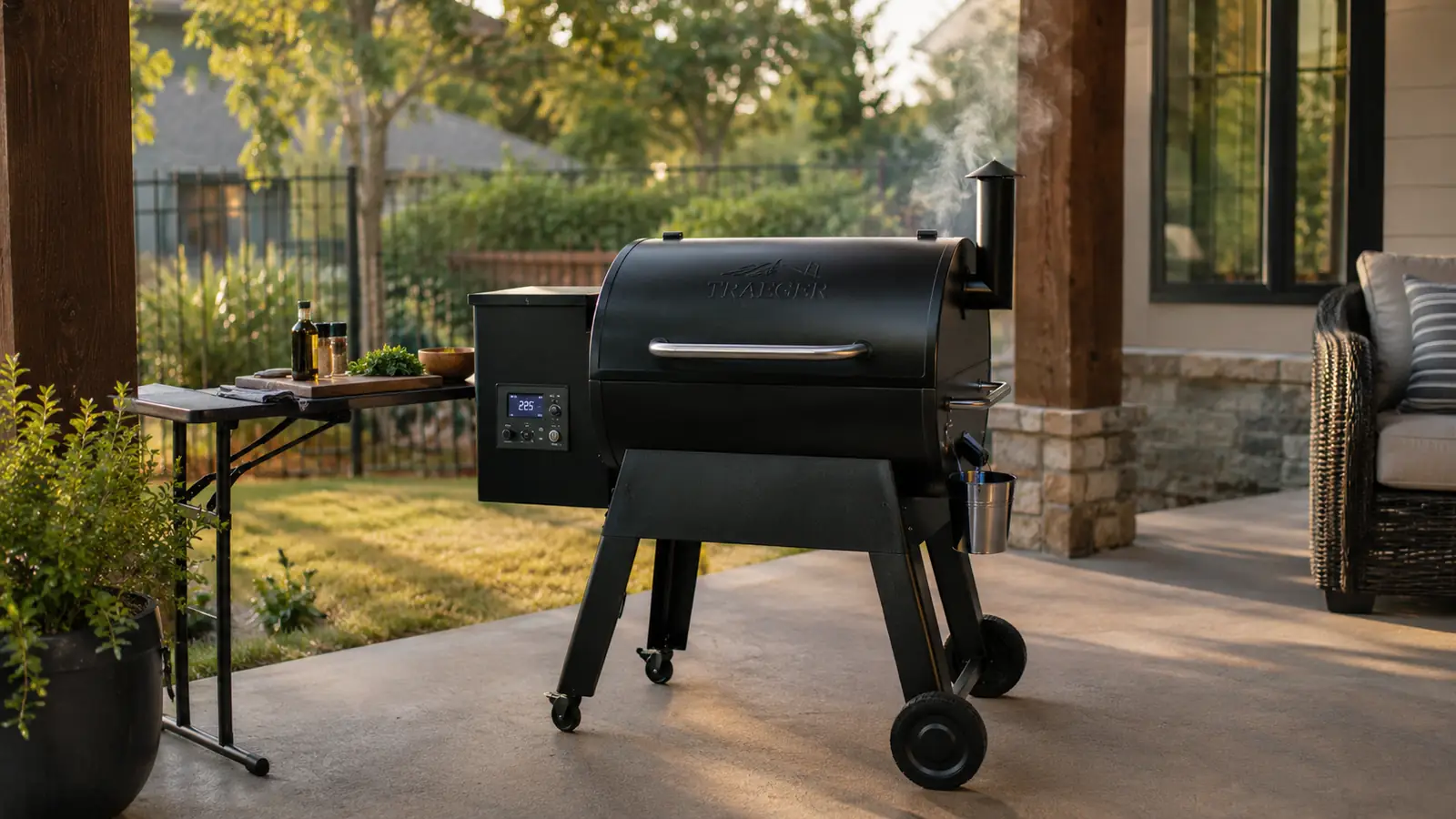
I bought my Z Grills ZPG-450A2 about two years ago, and I have cooked on it at least once a week since. I am Hank Dorsey, retired HVAC technician, and I have been cooking barbecue in my Lee's Summit backyard for decades. I bought this grill with my own money, and nothing in this review is sponsored. What follows is the honest version: what it does well, what it does poorly, and the things nobody tells you before you buy a pellet grill.
If you are a weekend cook who wants to move past burgers and dogs into real low-and-slow barbecue, the Z Grills 450A2 is one of the most reasonable places to start. It holds temperature, it has a big enough cook area for a family cookout, and it does not cost what the big-name pellet grills cost. But it is not perfect, and I would be lying if I said I never wanted to throw a wrench at it.
The Quick Verdict
A solid, honest pellet grill that holds temperature well and cooks a lot of food for the money. Not the prettiest, not the most precise, and the hopper is smaller than I would like. But for weekend barbecue, it earns its place on my patio.
Amazon Check Today's Price →Want to see today's price on the Z Grills 450A2?
I have cooked on this grill for two years. If you want a pellet smoker that handles a full packer brisket without a lot of fuss, it is worth a look.
Amazon Check Today's Price on Amazon →How I've Used It
I have used the Z Grills 450A2 for everything from a quick rack of ribs on a Tuesday night to an overnight brisket for a Sunday cookout with the grandkids. It has sat through a Missouri thunderstorm, a stretch of 95-degree days, and a few cold November nights. The grill is a freestanding wood pellet grill with a 459 square inch cook area, and it has handled all of it.
The specs say the cooking area is 459 square inches, and that is enough for a couple of briskets or a few racks of ribs laid flat. The unit itself measures about 45 inches wide, 28 inches deep, and 49 inches tall, and it weighs about 84 pounds. That weight matters, because it is heavy enough to stay put in wind but light enough that I can move it across the patio when I need to sweep.
The first brisket I cooked on it was a 14-pound packer I picked up on sale at the grocery store down the road. I trimmed it the night before, rubbed it with salt and black pepper, and had it on the grate by 6:00 on a Saturday morning. The controller ran at 225 all day without me touching it. It came off around 5:30 that evening, rested in a cooler for two hours, and sliced like it came out of a barbecue joint. Carol asked what I had done different, and the grandkids cleaned their plates. That cook alone told me the money was well spent.
Since then I have done pork shoulders for pulled pork, a whole turkey for Thanksgiving, chicken quarters, and more racks of ribs than I can count. The turkey surprised me the most. I had always roasted turkeys in the oven, but a smoked turkey at 275 came out with dark, flavorful skin and meat that stayed moist to the bone. The grandkids now ask for 'Grandpa's turkey' at the holidays, and that is the best review a backyard cook can get.
It has also sat through weather that would make a lesser grill quit. One June evening a thunderstorm blew in with rain coming down sideways. I was cooking chicken thighs, so I left the lid closed and let the rain hit it. When the storm passed twenty minutes later, the controller was still sitting at 350 like nothing had happened.
My MEATER Plus wireless thermometer gets used on every cook, but the grill also comes with a meat probe of its own. The large LCD screen on the controller shows the temperature, and the PID V3.0 controller does the work of keeping it steady. That is the part that surprised me most: a pellet grill in this price range holds temperature as well as grills that cost twice as much.
What Nobody Tells You About the Temperature Control
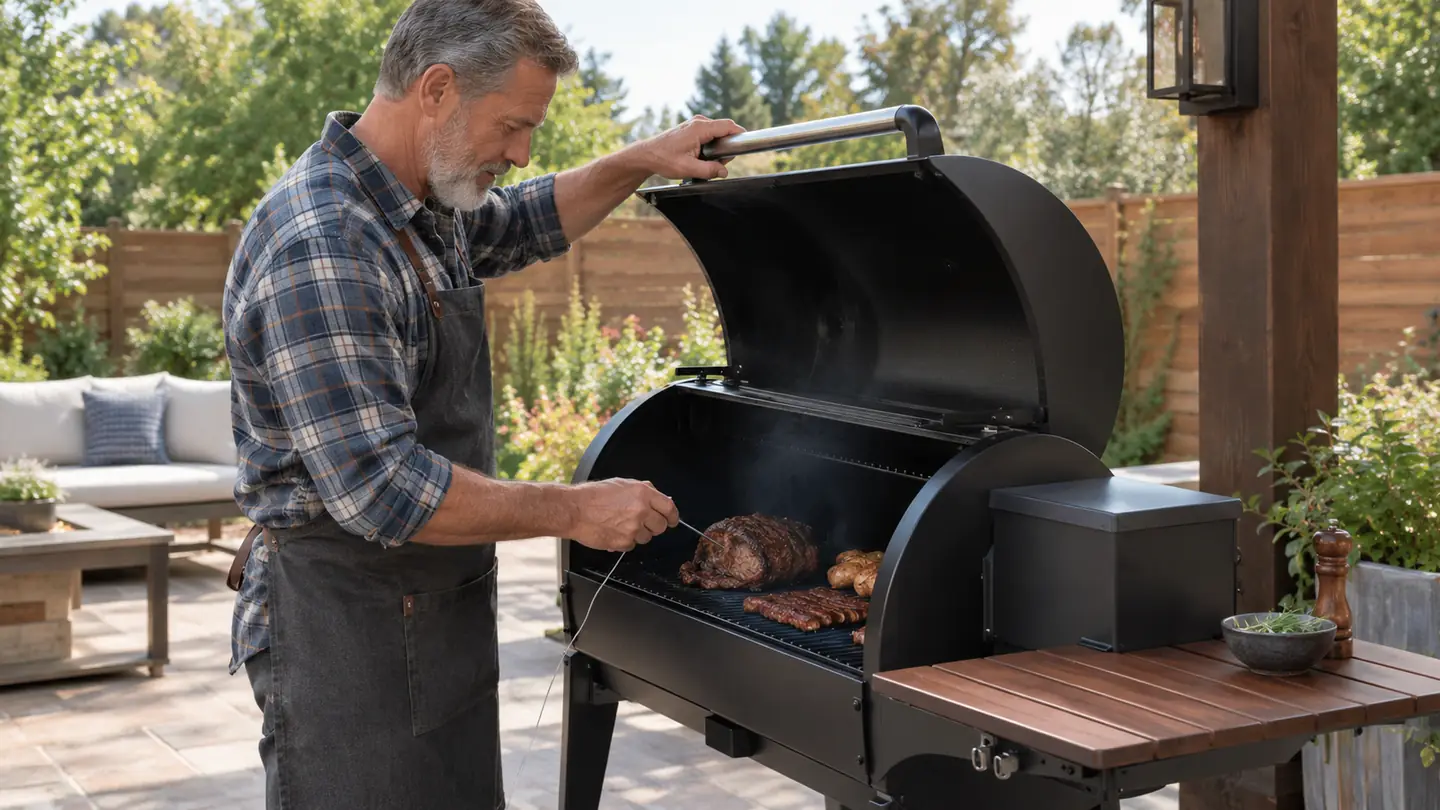
The big selling point of the Z Grills 450A2 is the PID V3.0 controller, which auto-tunes fuel and airflow to keep the temperature precise. I can confirm it works. I set it to 225 and it stays at 225, give or take a few degrees. I set it to 275 and it stays at 275. That is the whole game with low-and-slow cooking, and this grill wins it.
But here is what nobody tells you: the temperature you set is the temperature at the probe inside the grill, not the temperature at the grate where your meat sits. The difference can be 15 to 25 degrees depending on where you put your meat and how full the hopper is. If you are cooking a brisket flat that sits close to the edge, it will cook slower than the center. That is true of almost every pellet grill, but it matters more on a smaller cook chamber.
The first time I caught the difference, I was cooking two pork shoulders for a Sunday cookout. The controller read 250, but the shoulder closest to the left edge was running about an hour behind the one in the middle. I checked with my MEATER Plus and found the grate temperature near the edge was around 235 while the middle was at 255. The fix is simple: I rotate the meat halfway through the cook, and I keep the bigger cuts closer to the center. Once you know the grill has a warm side and a cool side, you plan around it instead of fighting it.
Here is the other part that took me a while to trust. The PID controller does not act like an old thermostat. It does not overshoot, swing, and settle. It holds a line, and that feels wrong at first because nothing else in a backyard behaves that way. My old propane grill would climb and drop, and I got used to nursing it. With this grill, I set 225 and walk away. The first few times I kept going back to check, sure it must be drifting. It was not. After two years, I trust it the way I trust a good furnace thermostat, and that is the highest praise an HVAC man can give.
The other thing nobody tells you: the PID controller is smart, but the hopper is not. The hopper on this grill is on the smaller side, which means on a long overnight cook you will need to check it and refill it. I have had a brisket go eight hours and need a refill before it finished. That is not a dealbreaker, but it is worth knowing before you fall asleep expecting to wake up to a finished brisket.
The temperature control on this grill is genuinely good. The hopper size is the thing nobody tells you about.
The Cook Area and the Foldable Shelf
The 459 square inch cook area is a real advantage. I can fit two full packer briskets, or four racks of ribs laid flat, or a whole turkey on a rack. For a family of five with grandkids coming over on Sunday, that is plenty. I have never once wished the cook area were bigger.
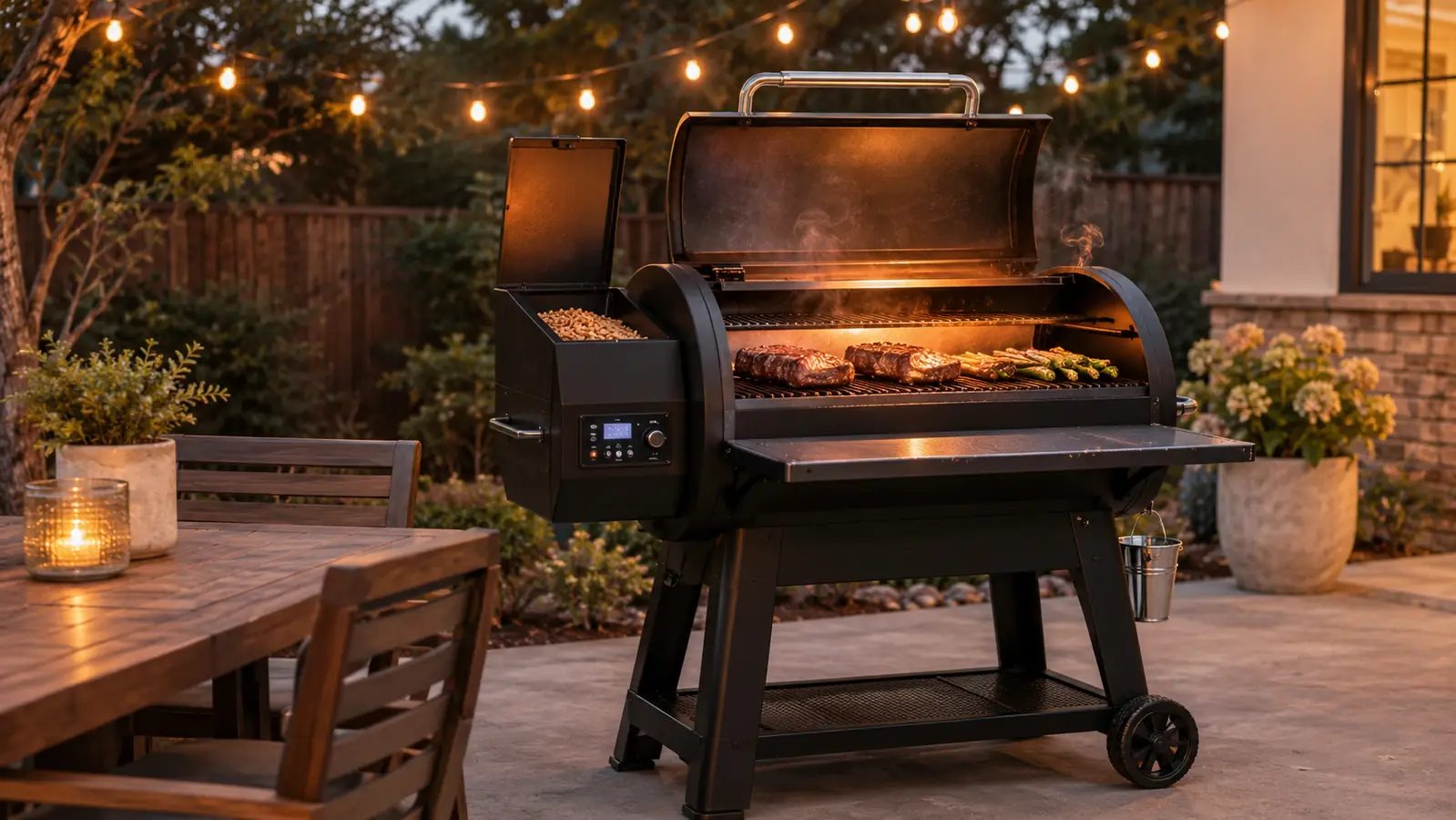
A Sunday cookout with the whole family is where this grill earns its keep. Last spring I had two briskets on the grate and a pan of beans underneath, and I still had room for a few sausages at the edge. The grandkids ate, the adults ate, and we sent leftovers home with both of my kids. I have cooked for as many as twelve people on a holiday weekend and never once wished the cook area were bigger.
One thing about the layout: the cook area is one big grate, not two separate sides. That means I can lay a brisket flat without bending it, which matters more than you think. A bent brisket cooks unevenly, and a brisket that hangs off the edge dries out. I lay mine flat with the point toward the left and let the whole 459 square inches work.
The foldable shelf and the side shelf are more useful than I expected. I use the side shelf as a landing spot for the meat probe and the grill brush. The foldable shelf gives me a place to set a plate or a pan when I am pulling meat off the grate. When I am not using them, they fold down and the grill takes up less space on the patio.
The side shelf has become the permanent home for my GRILLART bristle-free brush and a pair of tongs. The foldable shelf gets used every time I pull meat off the grate, because it puts a landing spot right at grill height. I keep a half sheet pan there and pull the ribs straight onto it. It is a small thing, but it saves a lot of trips back and forth to the prep table.
One thing to know: the foldable shelf is not a prep table. It is a shelf. It will hold a cutting board and a plate, but do not lean on it and do not expect it to support a full brisket while you slice. I use the fold-out prep table on my patio for that.
The Included Extras: Meat Probe and Rain Cover
The Z Grills 450A2 comes with a meat probe, a rain cover, a grease bucket, and assembly gloves. The meat probe is a real probe, not a cheap toy. It plugs into the controller and reads on the large LCD screen, so I can check the internal temperature of a brisket without opening the lid. That is a feature I use on every cook.
The rain cover is another thing that sounds minor until you need it. I live in Missouri, where the weather changes every twenty minutes. The cover has kept the controller dry through more than one sudden storm. The grease bucket is simple and works, though you do need to empty it more often than you think. A brisket and two racks of ribs will fill it a third of the way.
The assembly gloves are a nice touch. Assembly took me about an hour, and the gloves made the job easier on my hands. The instructions are clear enough for someone who has put together a grill before.
Where It Falls Short
Now the honest part. The Z Grills 450A2 is not perfect, and I would not tell you it is. Here is where it falls short.
First, the hopper. As I said, it is on the smaller side. On a cool evening at 225, a full hopper gets me about six hours before it runs low. A brisket that needs ten hours means I am up once to refill it, usually right around the time I would rather be asleep. That is not the end of the world, but it is the difference between "set it and forget it" and "set it, check it at 2 AM, and go back to bed."
Second, the finish. The high-temperature powder coating looks good when it is new, but it will scratch. I found that out about three months in, when I slid a cast iron skillet across the side shelf to make room for a platter. It left a mark about three inches long, and no amount of scrubbing has made it go away. I have a few more now, one on the lid from a wind-blown branch and a couple on the shelf from normal use. They do not affect the cooking, and the coating has never rusted through, but if you like a grill that stays showroom clean, this one will test your patience.
Third, the grease management. The grease bucket works, and the included bucket is a decent size, but the drip tray underneath the cook chamber needs regular attention. After a fatty pork shoulder, the tray will have a layer of congealed grease that needs scraping before the next cook. I keep a plastic scraper in the drawer of my prep table and give the tray a quick pass every time I empty the bucket. It takes five minutes, and it keeps the grease from smoking on the next cook. That is the part of barbecue nobody puts in the ads.
Fourth, the weight. At 84 pounds, it is not a grill you move around casually. It stays where I put it, which is what I want on a patio that gets gusty spring winds. When I need to sweep behind it, I lift the front end and drag it a few feet, then lift and drag it back. It is a backyard grill, and it wants to stay in the backyard.
One more thing I will mention, because it is the thing nobody tells you about any pellet grill: you have to keep the pellets dry. The rain cover helps, but if you leave the hopper open during a storm, you will be cleaning out a hopper full of swollen pellets. I learned that the hard way last fall. It took me the better part of an hour with a shop vacuum to clear it out. Now the cover goes on every single time I finish a cook, even if the forecast is clear.
What I Liked
- PID V3.0 controller holds temperature precisely, set it and it stays
- 459 square inch cook area fits two briskets or four racks of ribs
- Meat probe and rain cover included, real value in the box
- Large LCD screen is easy to read even in bright sun
- Foldable shelf and side shelf add useful workspace
- Alloy steel construction with powder coating feels solid for the price
Where It Falls Short
- Hopper is on the smaller side, overnight cooks need a refill
- Powder coating scratches if you slide pans across it
- Drip tray needs regular scraping on fatty cooks
- 84 pounds, not a grill you move casually
- Temperature at the grate runs different from the controller probe
Who This Is For
This grill is for the backyard cook who wants to graduate from a propane grill to real low-and-slow barbecue without spending a fortune. If you have been cooking burgers and dogs on a big-box gas grill and you want to try a brisket, the Z Grills 450A2 is a sensible place to start. It holds temperature, it has room for a family cookout, and it comes with the probe and cover you would otherwise buy separately.
It is also for the cook who wants to understand what they are doing. The PID controller does the work, but the grill still teaches you about airflow, fuel, and temperature. After two years, I understand barbecue better because of this grill, not in spite of it.
Who Should Skip It
Skip this grill if you want a set-and-forget machine for overnight cooks without ever getting up. The hopper will wake you up. Skip it if you need a big cook area for serious competition-style cooks, because 459 square inches is fine for a family but not for a competition trailer. And skip it if you want a grill that looks perfect on the patio, because the finish will show use.
If you already own a pellet grill and you are happy with it, you do not need this one. This is a first pellet grill, or a replacement for a cheap gas grill, not an upgrade for someone who already has a good smoker.
My verdict after two years of weekly cooks?
The Z Grills 450A2 is the grill I recommend to friends who want real barbecue without a real headache. It holds temperature, it cooks a lot of food, and it tells you the truth about what it is.
Amazon Check Today's Price on Amazon →