
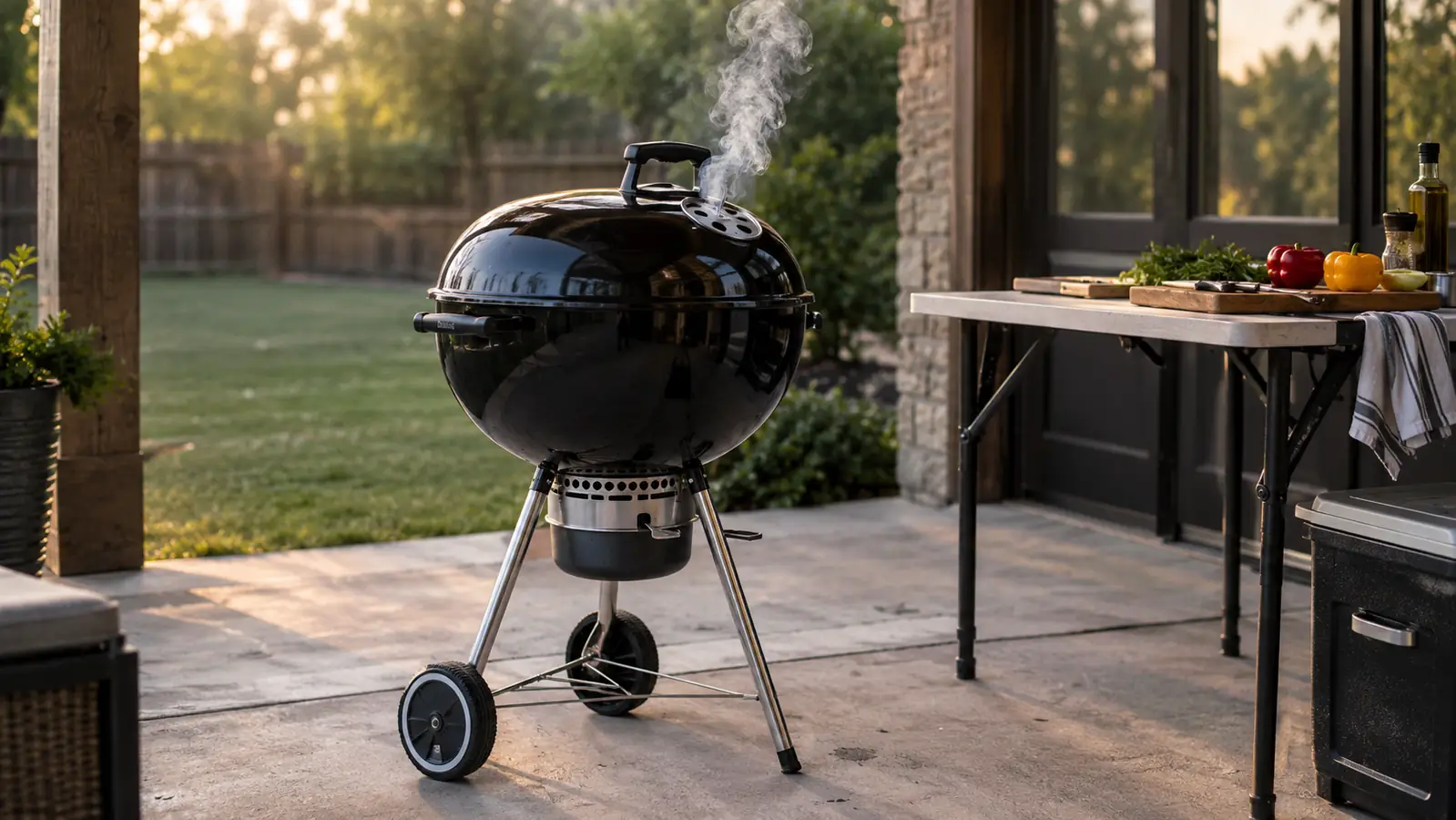
I have owned a Weber kettle for most of my adult life. The one on my patio right now is six years old, and it has cooked more meals than I can count: burgers for Sunday cookouts, whole chickens on weeknights, pork shoulders that ran until midnight. I bought it to replace a worn-out kettle, and I have never once wished I had bought anything else.
This review is not going to tell you the Weber Original Kettle is perfect. It is not. It takes longer to start than a gas grill, it needs attention while it cooks, and you have to learn to control air before you can control heat. What it will tell you is what the listing does not: what it is like to live with this grill for years, where it earns its keep, and where you will find yourself making excuses for it.
The Quick Verdict
The best all-around charcoal grill for a backyard cook who wants real charcoal flavor without a big learning curve, provided you accept the startup time and the cleanup routine.
Amazon Check Today's Price →The 22-inch kettle that has earned its spot on my patio
After six years of regular use, I keep coming back to the same conclusion: this is the grill I would buy again. The porcelain-enameled bowl holds up, the One-Touch cleaning system makes cleanup fast, and the 10-year limited warranty takes the worry out of the purchase. Check today's price on Amazon and see if it fits your patio.
Amazon Check Today's Price on Amazon →How I've Used It
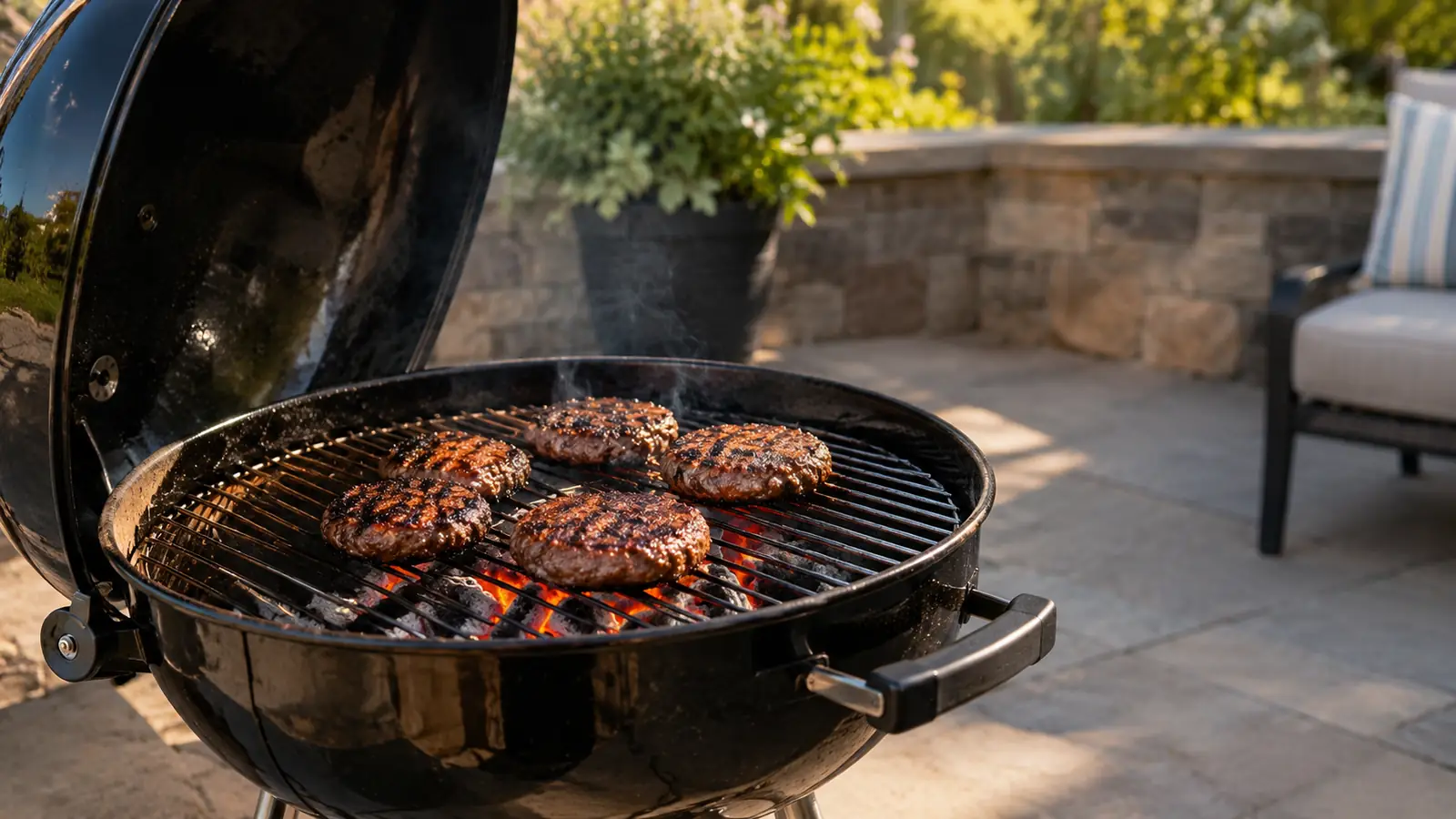
I cook on this kettle at least twice a week, year round. In the summer it sits in the middle of the patio with the fold-out prep table next to it. In the winter I pull it closer to the house and cook with the lid down to hold heat. The 22-inch bowl gives me 363 square inches of cooking space, which is enough for a couple of chickens or a rack of ribs, and it will hold up to 13 burgers made with a Weber burger press if I am cooking for the whole family.
My usual routine starts about 45 minutes before I want to eat. I light a pile of charcoal and let it ash over, then I spread it across the grate. For hot and fast work like burgers and steaks, I leave the dampers open and keep the lid off. For low and slow, I bank the coals to one side, set the meat on the other, and adjust the dampers until the temperature settles where I want it. The single main cooking area with dampers gives you enough control to do both, but only if you are willing to learn how the air moves.
The part nobody puts in the listing: the first few cooks will not be perfect. You will light too much charcoal or not enough. You will open the lid too often and watch the heat drop. I did all of that. Give yourself a month and the learning curve flattens out, and after that the kettle is one of the most forgiving grills I have used.

What Nobody Tells You About the One-Touch Cleaning System
The feature I appreciate most is the One-Touch cleaning system. The listing says it has an aluminized steel ash catcher, and that sounds like a small detail until you have owned a grill without one. With this system, you sweep the ashes through the bottom vents into the catcher below, and the job is done in one pass. I used to spend twenty minutes scraping ash out of a cheap grill. Now cleanup is part of the cooldown, not a separate chore.
The durable-plated steel cooking grate is another detail that matters over time. It holds up to regular use and cleans up with a stiff brush. I use a GRILLART bristle-free brush on it, and I have never worried about loose wire bristles ending up in dinner. The heat shield under the grate takes the worst of the flare-ups, which means the drips that hit it do not turn into a grease fire the way they did on my old propane grill.
Then there is the porcelain-enameled lid and bowl. Weber says they are engineered to withstand high temperatures and retain heat, and in six years mine have done exactly that. The outside still looks close to new. The inside has the normal wear you would expect, but no rust and no peeling. That is the reason I trust the 10-year limited warranty: I have never needed to use it, but I believe it would be honored if I did.
How It Cooks Over Time
The honest version of this review is about what happens after the first year. A lot of grills start out fine and then go downhill. The kettle does not. The porcelain-enameled finish has held up to Missouri summers, rain, and the cold. The dampers still move smoothly. The ash catcher still clips into place. The cooking grate has a little discoloration from years of use, but it is still flat and solid.
The cooking performance is consistent too. My Sunday routine is usually the same: burgers and brats for the family, cooked hot and fast with the lid open. The kettle gets hot enough to sear, holds enough heat to cook a full batch, and the 363 square inches of space means I am not working in shifts. When I want to do something slower, like a whole chicken or a pork shoulder, I set it up for indirect heat and use my MEATER Plus thermometer to keep an eye on the meat. The kettle holds a steady temperature better than I expected for a simple charcoal grill.
The word I would use is predictable. After six years, I know exactly how this grill behaves. I know how much charcoal to light, where to put the vents, and how long to wait before the grate is ready. That predictability is worth more than any feature list, because it means dinner comes out right the first time, even when the grandkids are running around and I am not paying full attention.
The Tradeoffs Nobody Mentions
Now for the things I would tell a neighbor before they buy one. First, charcoal takes longer than gas. From lighting the coals to putting food on the grate, I plan on 30 to 45 minutes. If you are used to a propane grill that fires up in five minutes, that feels like an eternity. You can speed it up with a chimney starter or a charcoal basket, but you cannot make it instant.
Second, the kettle asks you to manage it. There is no automatic temperature control. You are the control system. You set the dampers, you check the fire, you decide when to add charcoal. Some people love that. Some people just want to cook dinner without thinking about it. If you are in the second group, this grill will frustrate you.
Third, cleanup is easier than most grills, but it is not zero. The One-Touch system handles the ash, and the grate cleans up fast, but you still have to deal with the drips on the heat shield and the grease that collects in the bowl. I keep a small scraper and a bucket of soapy water on the patio, and I give the inside a real cleaning every few months. It is honest work, but it is nowhere near the chore my old grill was.
The last tradeoff is space. At 25 inches deep, 25 inches wide, and 39.5 inches tall, the 22-inch kettle takes up a real footprint on the patio. The cooking surface is 363 square inches, which is plenty for a family, but if you regularly cook for a crowd, you will find yourself wishing for a second grill. I solved that by adding a pellet grill a couple of years ago, but that is another piece of equipment and another place to store it.
Alternatives I Considered
When people ask me what else they should look at, I usually mention three directions. The first is a gas grill. If speed and convenience matter more than charcoal flavor, a good propane grill is the right tool. I cooked on one for years before it rusted out, and I understand why so many people own one. It is not better or worse. It is just a different job.
The second is a kamado-style ceramic grill. Those hold heat even better than a kettle and do a great job on low and slow cooks. They also cost more, weigh more, and take more care to move around. I have cooked on a neighbor's kamado, and it impressed me. For my money, the kettle does 90 percent of the same work for far less money, and I do not worry about cracking a ceramic shell when it rains.
The third is a pellet grill. I bought a Z Grills ZPG-450A2 about two years ago, and it is excellent for long unattended cooks. You set the temperature and it feeds pellets to hold it there. But it does not sear the way a kettle does, and it needs electricity. The kettle and the pellet grill do different jobs on my patio, and I would not want to give up either one. If you can only buy one grill, the kettle is the more versatile choice.
What I'd Tell Someone Buying Their First Kettle
If a neighbor asked me whether to buy one, I would say yes, and then I would give them three pieces of advice. Start with a full chimney of charcoal and let it ash over before you spread it out. Keep the lid closed as much as you can stand, because every time you open it you lose heat. And do not judge the grill by your first two cooks. The kettle rewards patience, and the people who struggle with it are almost always the ones who gave up too early.
I would also tell them to buy a good thermometer before they buy anything else. I use a MEATER Plus on every cook, and it took the guesswork out of learning this grill. You can cook by feel once you have done it for years, but a thermometer turns the first few months from a guessing game into a lesson you can actually learn from.
And one more thing: buy the 22-inch, not a smaller one. The 363 square inches of cooking space disappears fast once you start cooking for more than two people. I have never once wished I had less room, and the larger bowl holds heat better when the wind picks up. The 22-inch is the size that does everything.
What I Liked
- Porcelain-enameled lid and bowl hold up for years without rust
- One-Touch cleaning system makes ash cleanup a single pass
- 363 square inches of cooking space handles a family meal
- Dampers give real heat control once you learn them
- 10-year limited warranty backs a simple, repairable design
Where It Falls Short
- Charcoal startup takes 30 to 45 minutes before you cook
- No automatic temperature control; you have to manage the fire
- Takes up a large footprint on a small patio
- You will need practice to get consistent low-and-slow results
Six years in, the porcelain-enameled bowl still looks close to new, and the One-Touch system still dumps the ash in one pass. That is the honest measure of a grill.
Who This Is For
Buy the Weber Original Kettle if you want real charcoal flavor and you are willing to spend a few weeks learning how to manage a fire. It is ideal for the backyard cook who grills for the family on weekends, wants enough space for burgers and chicken, and does not mind the ritual of lighting charcoal and watching the smoke. It is also a great first charcoal grill because the design is simple, the parts are easy to understand, and the 10-year warranty means you are not gambling on a cheap grill that will rust out in two seasons.
If you are the kind of cook who likes to know exactly how things work, you will enjoy this grill. You open the dampers and the fire gets hotter. You close them and it gets cooler. That direct relationship is the same reason I got into HVAC work decades ago. It is honest, fixable, and easy to understand.
Who Should Skip It
Skip the kettle if you mostly cook on weeknights after work and need dinner on the table in 20 minutes. Charcoal will not get you there. Skip it if you do not want to manage a fire, because this grill will not manage itself. And skip it if you regularly cook for big crowds, because 363 square inches fills up fast when there are twelve people on the patio. For those situations, a gas grill, a larger charcoal grill, or a pellet grill will serve you better.
I would also tell someone to skip it if they are not willing to clean up. The One-Touch system makes the job faster than any grill I have owned, but you still have to do it. Ash left in the bowl will eventually cause problems, and a dirty grate will ruin a good meal. If that sounds like work you will not do, this is not the grill for you.
Still weighing it? Here is my bottom line.
After six years and hundreds of cooks, I would buy the same Weber Original Kettle again tomorrow. It is not the fastest grill or the easiest, but it is the one I trust to put good food on the table. The 10-year limited warranty and the porcelain-enameled build make it a buy-once grill if you take care of it. Check today's price on Amazon and decide for yourself.
Amazon See Today's Price on Amazon →